

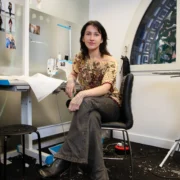
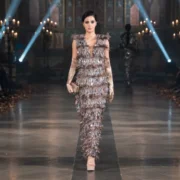
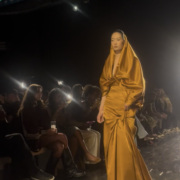


“Investing in women’s entrepreneurship means helping to build a household, a business, a village, a city, a country, even a continent. We should therefore give more means to all women in Africa to educate themselves, create and finance their businesses in order to take a necessary and important place in society. It is by doing this that we will contribute to real autonomy, to the education of young people, to the preservation of an artisanal and cultural heritage, to the transformation of our heritage into social capital and finally to a solid foundation for a prosperous and sustainable African economy” – Nelly Wadji
MEET THE BLACK WOMEN IN FASHION WORKING TIRELESSLY TO PROVIDE GLOBAL ACCESS TO AFRICAN BRANDS.
When it comes to access to basic opportunities and inclusion in the fashion industry, women, particularly black women, have often been handed the shorter end of the stick. Despite perceptions that black women in fashion may sometimes gate-keep one other, there are those who defy these norms, championing equal access to opportunities within the fashion industry. For women’s history month, we are spotlighting black women in fashion, who have tirelessly dedicated themselves to provide global access to African and black-owned fashion brands. Through years of dedication, they have ensured that African fashion is not only accessible on a global scale but also receives the recognition it deserves.
“When you empower a woman, you empower a generation”
View this post on Instagram
OMOYEMI AKERELE
Born and raised in Lagos, Nigeria, Omoyemi Akerele stands as one of the driving forces behind Nigeria’s vibrant fashion scene. As the founder of Style House Files and Lagos Fashion Week, she has devoted her life to empowering African and black designers.
Through Style House Files, Omoyemi spearheads a business development agency that catalyzes change within the Nigerian and African Fashion Industry. Her mission? To offer mentorship to emerging designers, uplift local artisans, and equip young talent with the tools needed to launch globally relevant brands.
In 2011, she launched Lagos Fashion Week, an annual four-day event showcasing the best of Nigerian and African fashion. This monumental event, held in Lagos, Nigeria, serves as Africa’s largest clothing trade show, drawing designers, buyers, manufacturers, and media from around the world. With over 60 African designers represented and more than 12,000 attendees each season, Omoyemi ensures that African designers gain access to international exposure, press, and recognition crucial for their brand’s growth.
Omoyemi’s impact extends beyond the borders of Nigeria. She collaborates with international fashion weeks, such as London Fashion Week and Pitti Immagine, to provide African brands with opportunities to showcase their talent on an even more global stage.
Yet, Omoyemi’s vision transcends mere fashion; it’s about culture and empowerment. She believes that fashion is more than just clothing—it’s a reflection of identity and resilience. Through initiatives like Fashion Focus Africa, she nurtures rising designers across the continent, offering mentorship and guidance for business growth. Omoyemi has showcased the work of rising fashion designers, including Orange Culture, Lagos Space Programme, Desiree Iyama, Kenneth Ize, and provided business mentoring and creative workshops to countless more.
Prior to her groundbreaking work with Style House Files, Omoyemi honed her skills as a senior style editor at True Love magazine and established an image consulting agency with Bola Balogun, a celebrity stylist fades in Lagos.
Omoyemi’s efforts have not gone unnoticed. She has been recognized on Business of Fashion’s Global 500 list and received the Outstanding Contribution to African Fashion award at the AFI Fashion Awards. Her relentless dedication to promoting African designers globally has reshaped the landscape of the Nigerian fashion industry, making it more inclusive, sustainable, and economically viable. Through her work, Omoyemi Akerele continues to be a beacon of inspiration for aspiring designers and fashion enthusiasts alike.
View this post on Instagram
AMIRA RASOOL
Amira Rasool, a writer, entrepreneur, and consultant, founded The Folklore upon returning to the US from her first trip to South Africa. During her travels, she discovered numerous amazing local brands. There was however no easy way to access them back home. Despite receiving compliments on her outfits and inquiries about where to find them, she found that these brands lacked the technology and infrastructure to ship internationally or connect with US retailers. This realisation fuelled her mission to bridge the gap between African designers and global consumers.
“It wasn’t just a South African problem. It was a problem with all of Africa.”
As a result, Amira founded The Folklore Group. a marketplace where consumers could discover these diverse brands. It bought, shipped and handled last-mile delivery for several black owned fashion brands across 20 countries. The platform has however evolved into business-to-business platform connecting global retailers with brands from emerging markets such as Africa, South America, Asia and the Caribbean.
A graduate of African American and African studies, Amira pays particular attention to designers from marginalised communities providing them with a platform to reach international consumers. The motivation for her business is providing economic opportunities to underrepresented business owners is the core purpose of her brand.
“We’re specifically targeting brands that have been geographically or racially marginalised from being able to have this access to retailers”
Amira’s efforts have garnered significant support. The Folklore now collaborates with large retail stores like by Nordstrom, Crate & Barrel, Bloomingdale’s and over a dozen other retailers to source minority-owned brands. This gives even more visibility to these brands and presents them with an opportunity that was incredibly difficult prior.
Securing $3 million in funding, including a notable $1.7 million pre-seed investment in 2021, Amira has proven herself as one of the youngest women to raise such substantial funding in the pre-seed round.
Currently, the Folklore collaborates with 23 enterprise retailers and over 400 brands across 42 countries, empowering diverse designers and fostering inclusion within the fashion industry. Additionally, Amira’s company provides showrooms at international fashion weeks, such as NYFW and PFW, offering black-owned and African businesses a platform to showcase their creations to global buyers.
View this post on Instagram
ADAMA NDIAYE (ADAMA PARIS)
Born in Kinshasa, Democratic Republic of Congo (then called Zaire), and raised in Europe to diplomat parents, the Senegalese entrepreneur, Adama Ndiaye is a prominent force within the African fashion industry. She has pioneered much of the industry infrastructure utilised by Senegal’s design community. Recognising the challenges African designers faced in gaining mainstream acceptance and securing funding, Adama took action.
In 2002, she launched Dakar Fashion Week, providing a platform for Senegalese designers as well as other African designers to showcase their designs to international audiences. By its tenth year in 2012, it attracted designers from nine countries in Africa and Asia, drawing a global audience to Dakar.
In addition to running her own brand, Adama Paris, she runs a multi-brand concept store called Saargale which has outlets in Casablanca, Morocco and Paris. Adama has generated growing interest in brands from Senegal and other francophone countries where she has cultivated industry networks across West, North and Central Africa.
Over her 20-year career, Adama has not only created platforms but also provided guidance to several black women in fashion as well as entrepreneurs across the region, fostering growth and innovation. Her impact is felt beyond the continent as she is also responsible for pioneering Black Fashion Week events across the world in places such as Brazil, Prague, France, and Canada.
Through her own collections and her advocacy work, Adama Ndiaye has been a steadfast champion of African fashion for decades. In 2014, she was honoured as one of the 10 most influential Africans by FRANCE 24’s sister radio station Radio France International. Her relentless dedication to promoting African fashion has left an indelible mark on the industry, inspiring designers and entrepreneurs alike.
View this post on Instagram
RENI FOLAWIYO
Reni Folawiyo is the Nigerian entrepreneur on a journey to change the way African’s view themselves within the fashion industry “I felt we needed something iconic. Something that will change the way we see ourselves and also change the way the world sees us”
To do this, Reni established a concept store in Lagos, Nigeria called Alára which means “wondrous performer.” With the store she aims to establish a contemporary visual language for African luxury.
“I felt that we had gotten to a stage where people felt that anything African was either too crafty, just not interesting enough, or not designed in the way that we kind of understood the rest of the world to create design.”
Beyond its primary role as a retail concept store, Alára also serves as an artist incubator, restaurant, and cultural destination for the continent, captivating visitors with its fusion of fashion, food, art, and architecture.
Alára embodies Folawiyo’s vision of bridging the gap between African and global design excellence. Set on a path to give African designers even more global recognition, Alára is renowned for stocking brands like Kenneth Ize, Thebe Magugu, Lisa Folawiyo, Jacquemus, Stella Mc Cartney, Dries Van Notes, Valentino and Marni
Alára made its international debut in partnership with the Brooklyn Museum’s Africa Fashion exhibit. The exhibit in collaboration with the Victoria and Albert Museum was a celebration of Africa’s profound impact on fashion and textiles spanning from the mid-20th century to present day, the exhibition simultaneously explored music, popular culture, art, politics, and iconic moments in African history. Alára’s Brooklyn installation further amplified African designers’ voices. It offered pieces from designers like Orange Culture, Luar, Abdel el Tayeb, Selly Raby Kane, Lagos Space Programme, Tongoro and many more.
Reni Folawiyo’s dedication is beyond retail, she is passionate about empowering and nurturing African talent. She has pioneered initiatives like the Alára Emerge competition offering mentorship to creatives in photography, design, and fashion and the Alára Table for Young Designers where she connects emerging talents with experienced professionals in various fields.
Reni Folawiyo is on a mission to redefine the essence of African fashion, ensuring that it stands shoulder to shoulder with its Western counterparts. Through Alára, she’s not just creating a store; she’s fostering a movement that celebrates African creativity and excellence on the global stage.
View this post on Instagram
FARAI SIMOYI
Farai Simoyi went from fashion designer to fashion executive. Honoured on the pages of FORBES and featured by Vogue, Fast Company, Newsweek, New York Magazine, and Essence Magazine for her contributions to the fashion industry, Simoyi has helped over 70 international brands successfully enter the U.S. market.
Simoyi has 15 years of experience designing and consulting for some of the most globally recognised celebrities with fashion brands and industry staples such as Beyonce, Jay-Z, Nicki Minaj, Justin Timberlake, and Rachel Roy to name a few.
Following her impressive competitive delivery in the first season of the ‘Netflix’ fashion design competition series, ‘Next in Fashion,’ Simoyi continued her mission to provide access and visibility to global artisans and designers in the U.S. market.
She founded the Narativ in August 2017. It’s described as “a curated house of ethically sourced artisan brands from around the world known as The Narrators.” The Narativ was founded as a space for global designers and artisans to be Seen, Valued, and Heard. The Narativ stands for telling the African and African American narrative through design.
Inspired from her personal experience, Farai is determined to make the journey easier for other designers coming behind. She decided to create a platform to showcase African artisans and people from marginalised communitiesin the U.S. — and provide them with the guidance she lacked when she first started out on her own.
“The mission for me is very personal because I have been granted so many opportunities. So many people I know from back home weren’t given that. I can’t be a child of Africa and not give back. If all those people had the same experiences as me they would be way beyond me and would be doing so much more. It’s about giving back in terms of allowing creatives on the continent to find a way to promote themselves.”
In 2022, Simoyi became a Fashion Scholarship Fund Equity Committee member in partnership with the Virgil Abloh “Post-Modern” Scholarship Fund. The Fashion Scholarship Fund Equity Committee works directly with the country’s most talented young students from diverse backgrounds and awards over $1 million each year in scholarships to help students succeed in all industry sectors, including design, merchandising, marketing analytics, and business strategy. Simoyi is also an advisory board member for the Council for International African Fashion Education (CIAFE) representing North America and board member for the Philadelphia Fashion & Garment Industry Task Force (PFGITF)
Evidently, black women in the fashion industry are making significant strides despite starting from humble beginnings. They’re not just achieving success for themselves but are also opening doors of opportunity for others. It’s crucial that we continue to empower and uplift black women because when we do, we’re not just empowering individuals; we’re empowering entire generations. Let’s celebrate and support all the women who are paving the way for others and creating a brighter future for us all.
Stay updated on all things fashion, lifestyle, and culture. Follow us on Instagram @stylecartel and TikTok @stylecartelmedia. Don’t miss out – sign up for our newsletter to get early access to the latest drops in your inbox.
Stay tuned to StyleCartel for more Fashion content.
