


Matières Fécales, Vaquera, Rick Owens and Ottolinger redefine the relationship between clothing, the body and rebellion.
Matières Fécales: Fashion as Protest
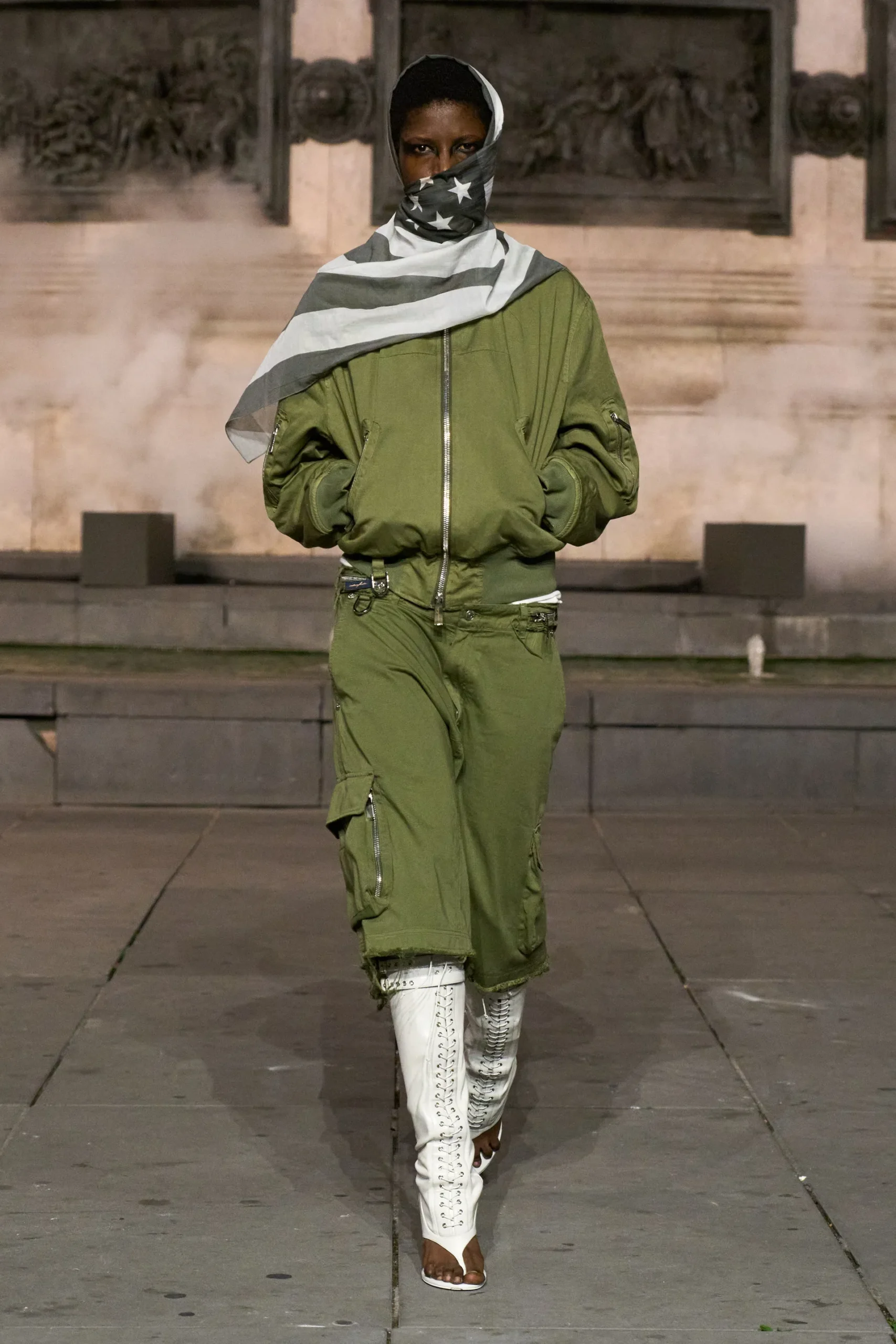
Matières Fécales, the Parisian fashion house, presents the 99 Per Cent show for SS27. The timely collection continues the brand’s social commentary on the political and social climate of contemporary society. Following the 1 Per Cent show, where greed and fear were used as symbols of sin, the 99 Per Cent collection embodies the anger of the general population. Matières Fécales takes the ordinary, denim, hoodies and everyday streetwear, and transforms them into punk-inspired looks that feel deliberately anti-establishment.
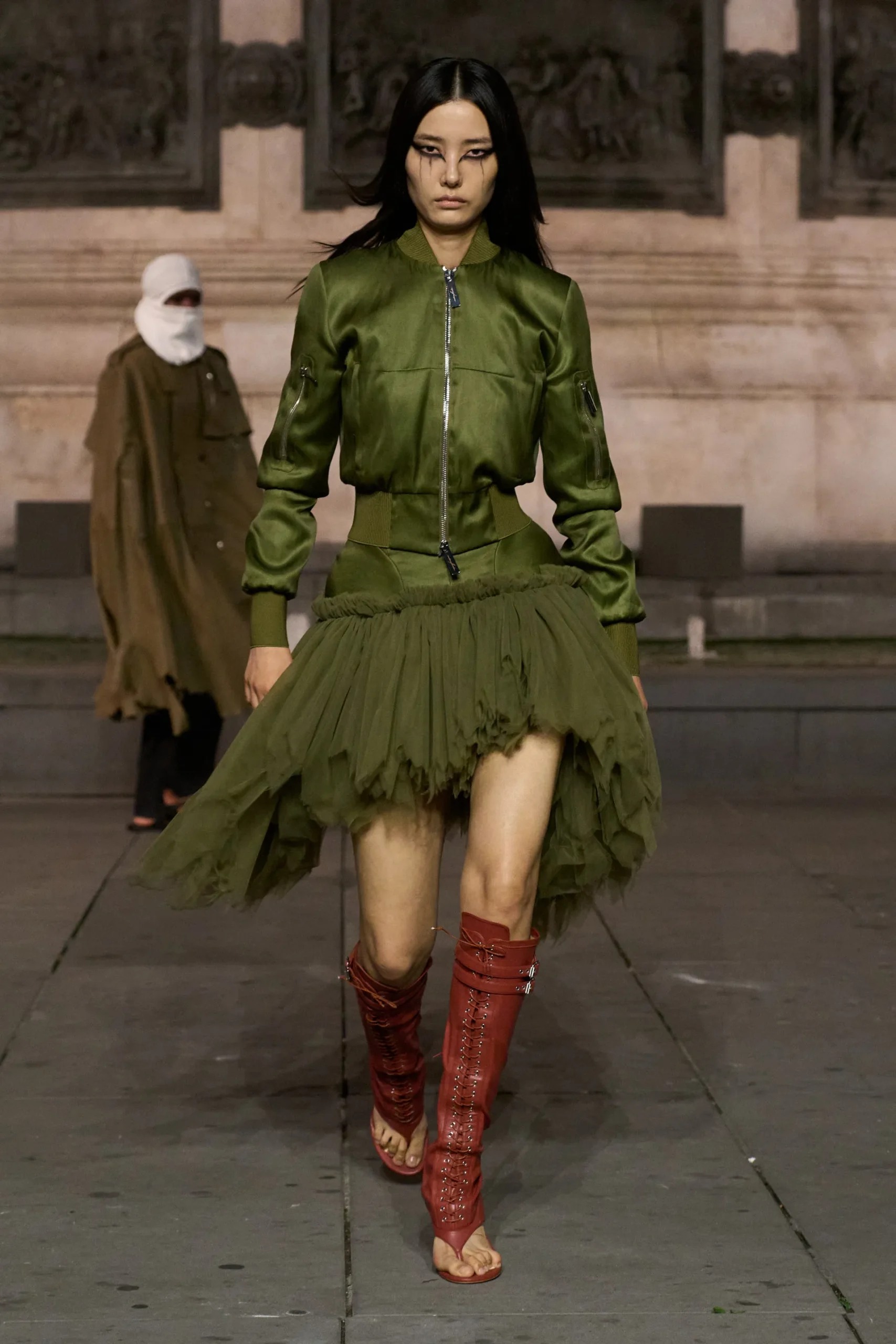

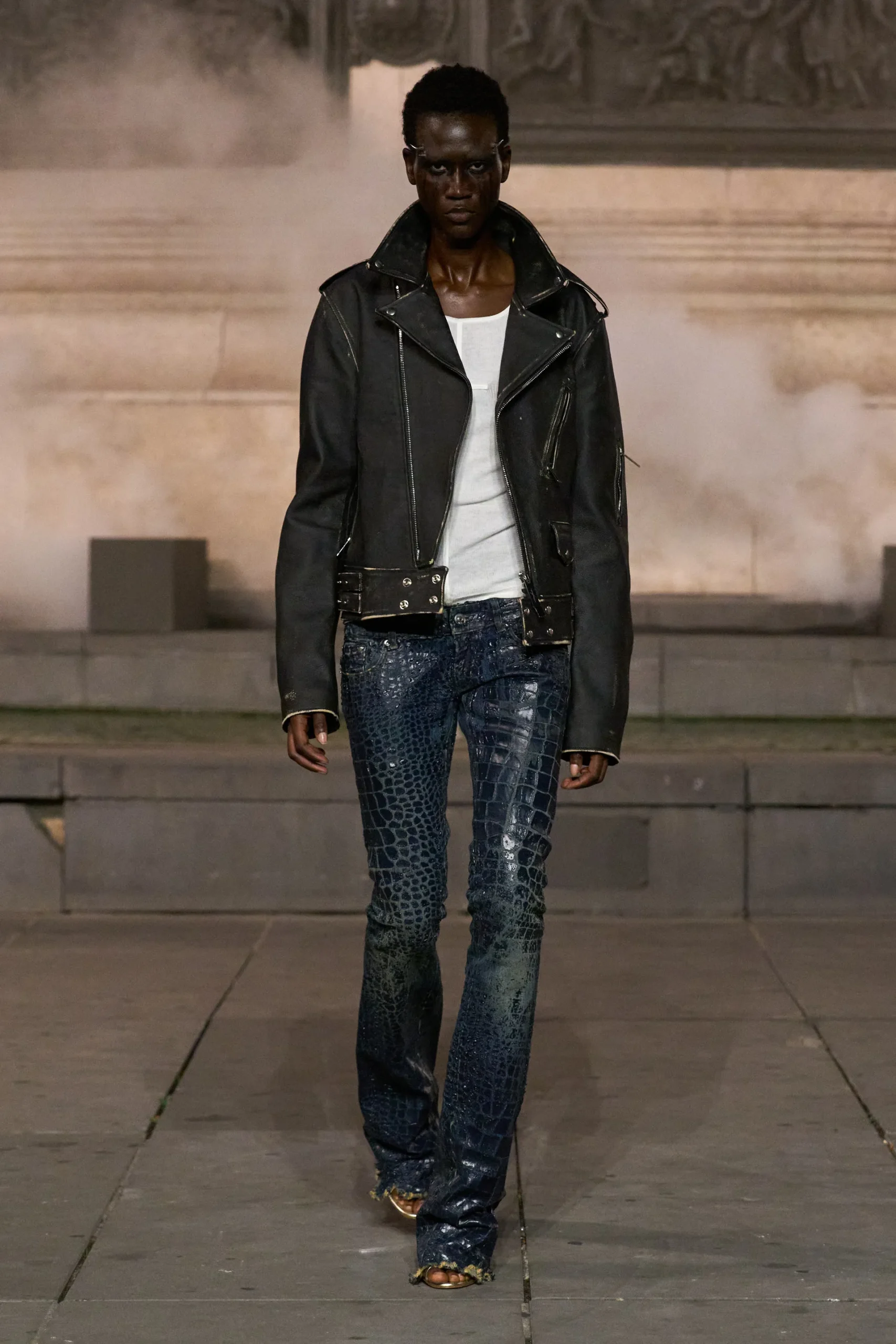
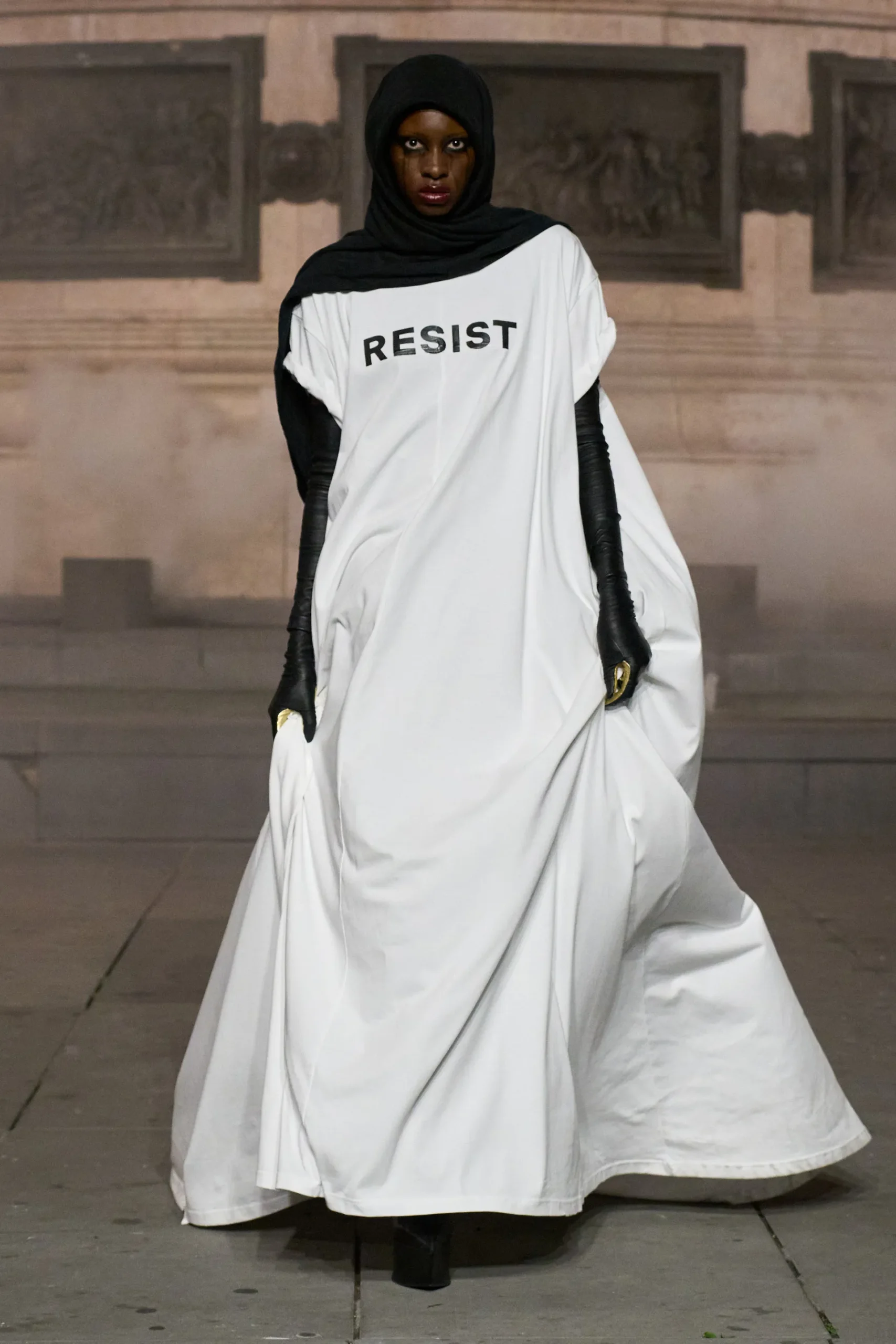


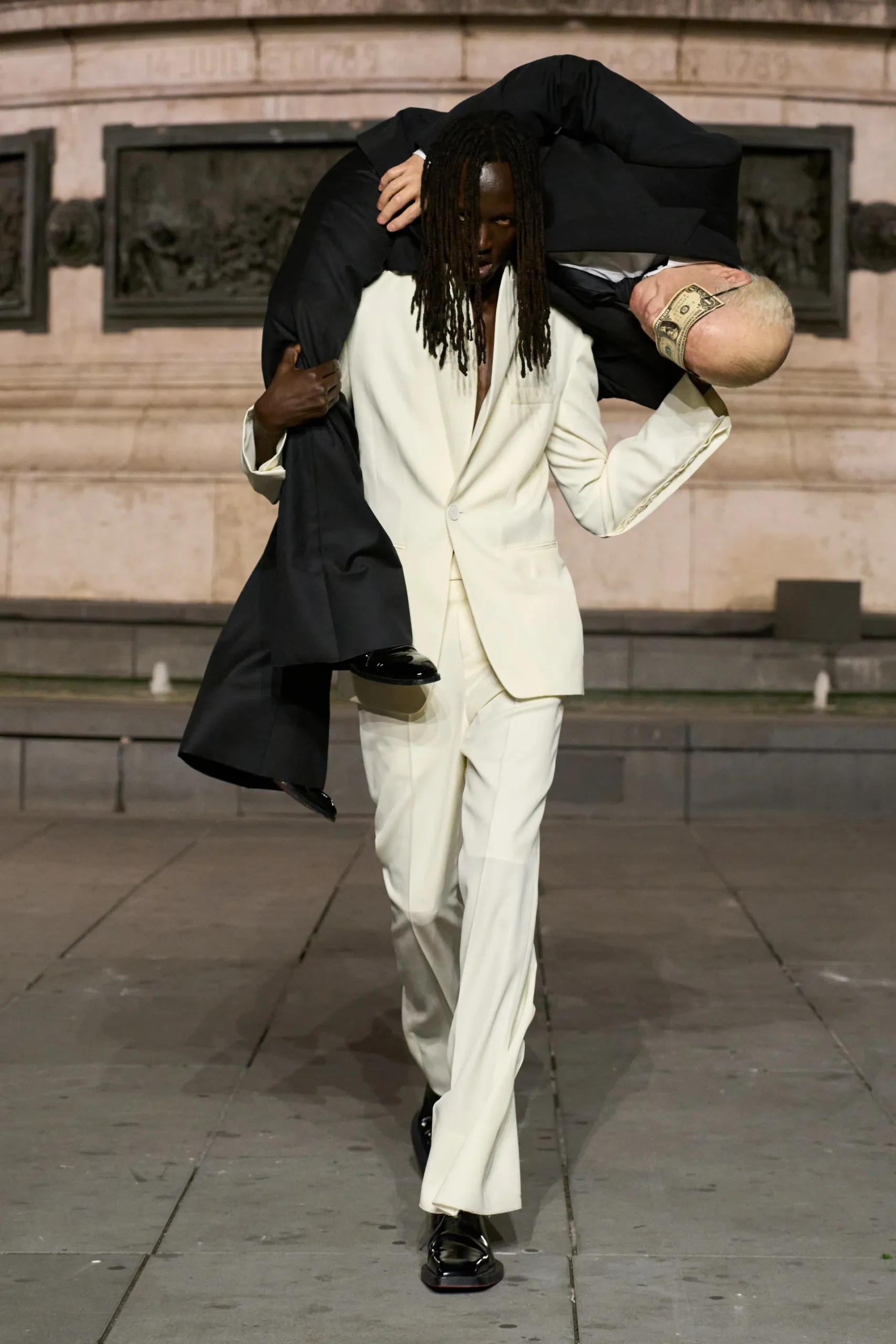
One of the most striking moments is a model carrying a prosthetic dead body while wearing a look from the 1 Per Cent collection. The image suggests that wealth and power cannot exist without the labour and participation of ordinary people, confronting the relationship between the elite and the masses.
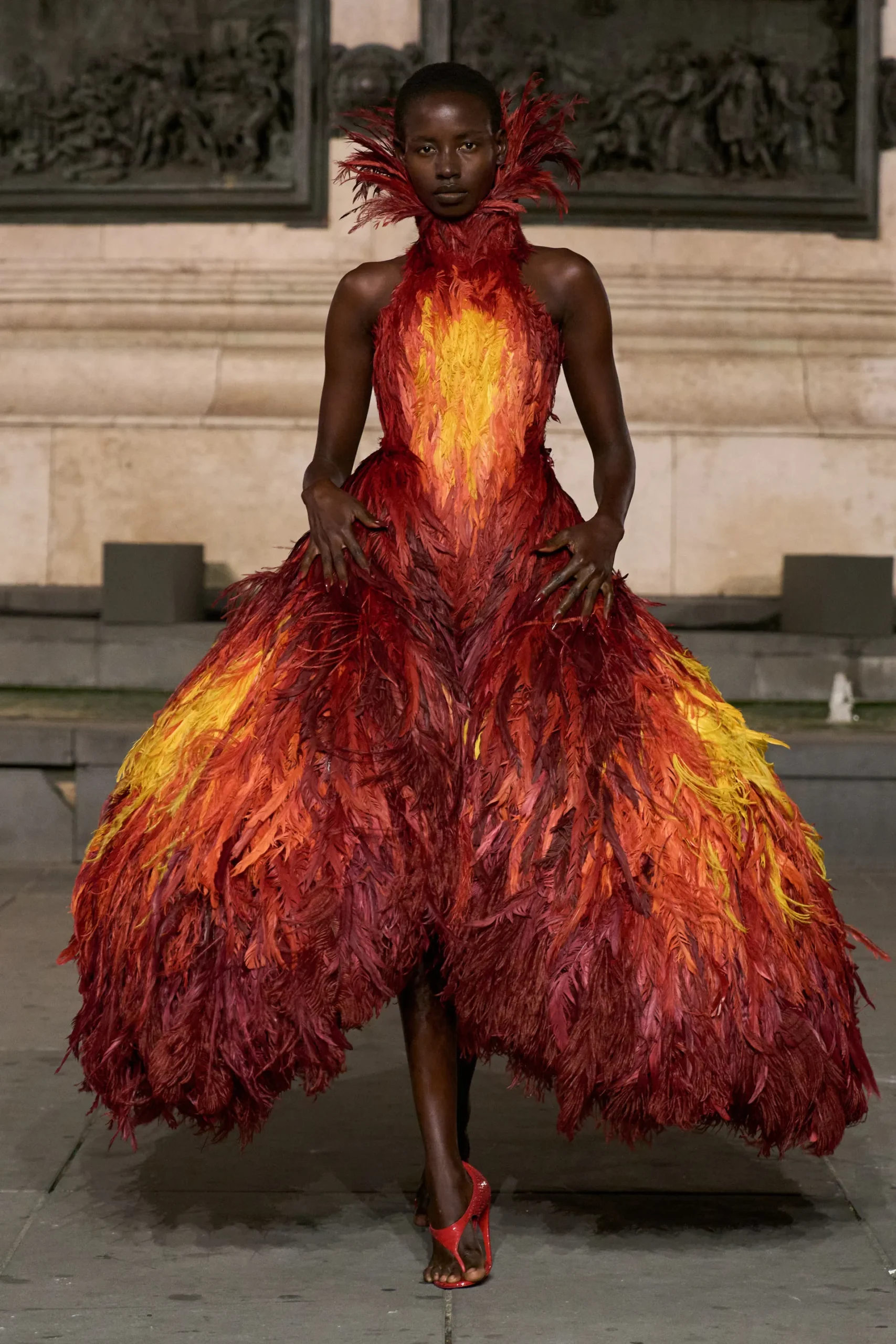
The collection draws from rebellious subcultures through leather punk references, while wet-look dresses evoke motherhood and amber-coloured ballgowns suggest fire. Nationalistic flags become symbols of protest, turning familiar political imagery into something unsettling and confrontational.
The colours of the French flag appear across slim-fitting dresses, embodying a commitment to protest, while American-flag balaclavas suggest a nation fighting for freedom beneath a concealed identity. The collection epitomises the complicated feelings of the masses towards governments, inequality and systemic corruption. Rather than accommodating elitist fashion, Matières Fécales rejects conventional ideas of beauty and respectability, turning fashion into an anti-establishment weapon.
Vaquera: Fashion as Antagonism

The New York label Vaquera, founded by Patric DiCaprio and Bryn Taubensee, brings a curated punk energy to Paris Fashion Week. The collection marries New York chaos with Parisian sophistication, blending French-maid imagery with American beauty ideals and pop-cultural references.
Traditional Parisian style codes of the 1920s and 1930s are modified into pieces that challenge the social ideals associated with them. Electrocuted hairstyles and tweed boater hats create a meeting point between 1980s rock glamour and old-school Parisian chic. Pops of neon contrast against military khaki and navy, elevating the familiar French-maid silhouette and transforming it into something louder and more confrontational.
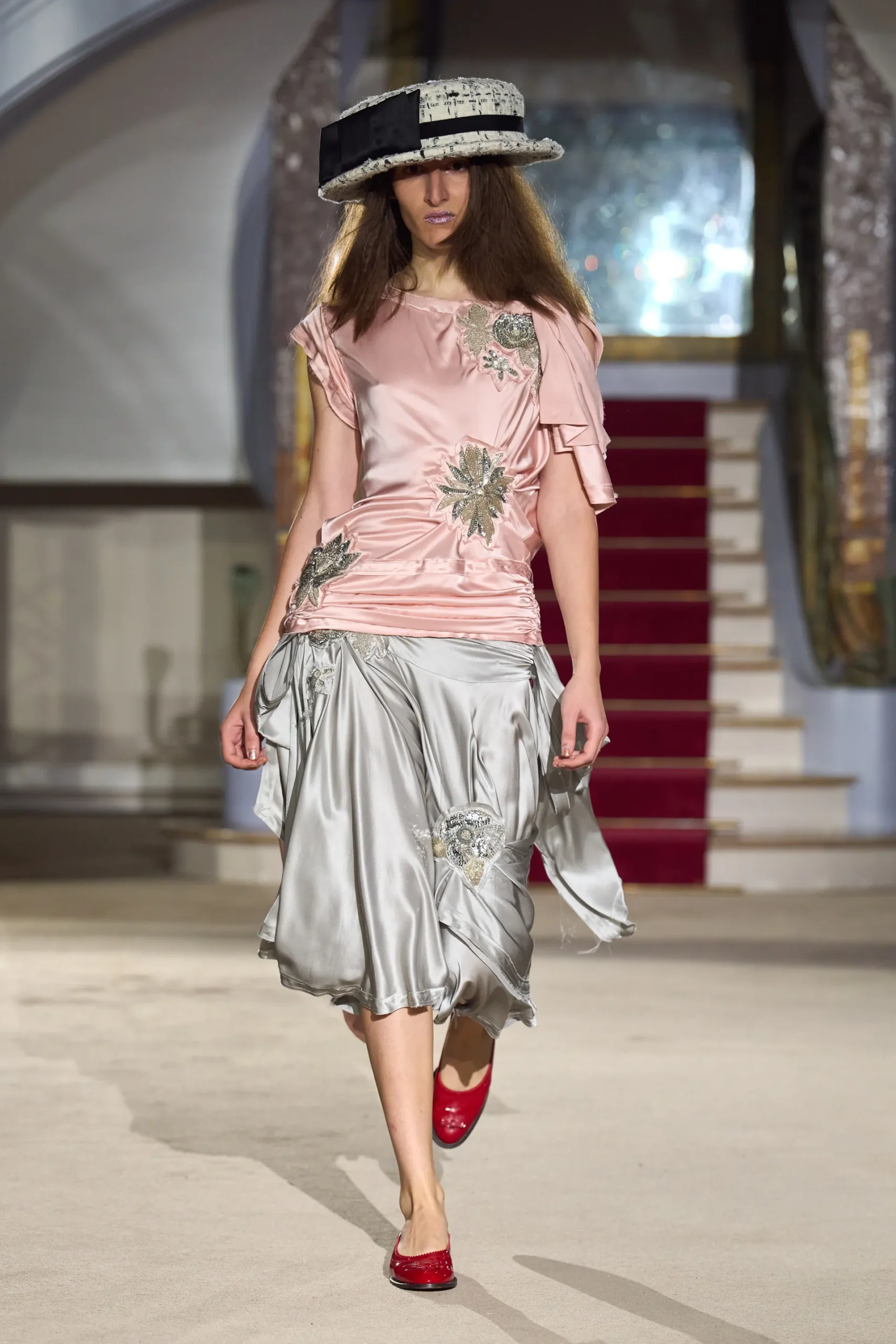


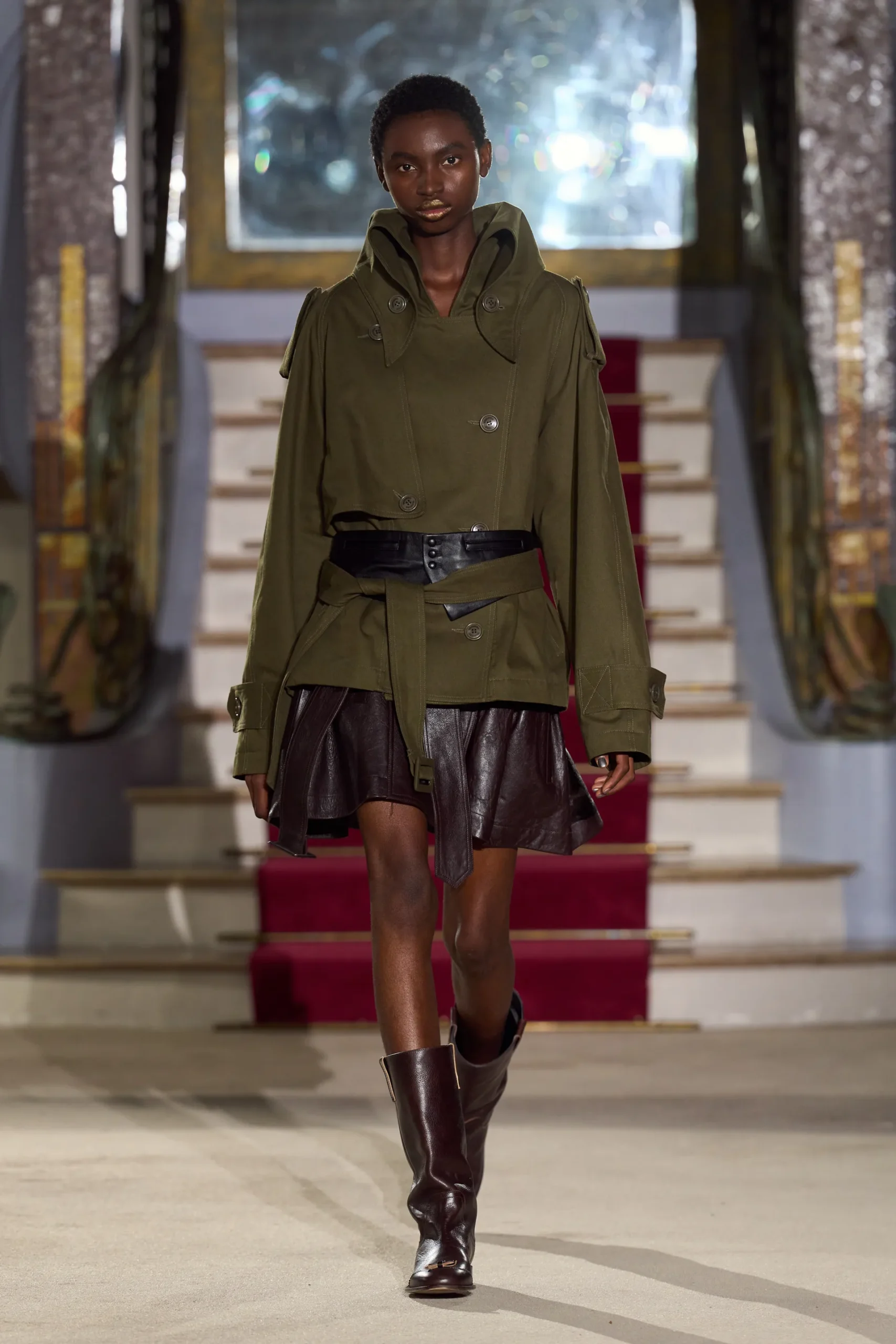
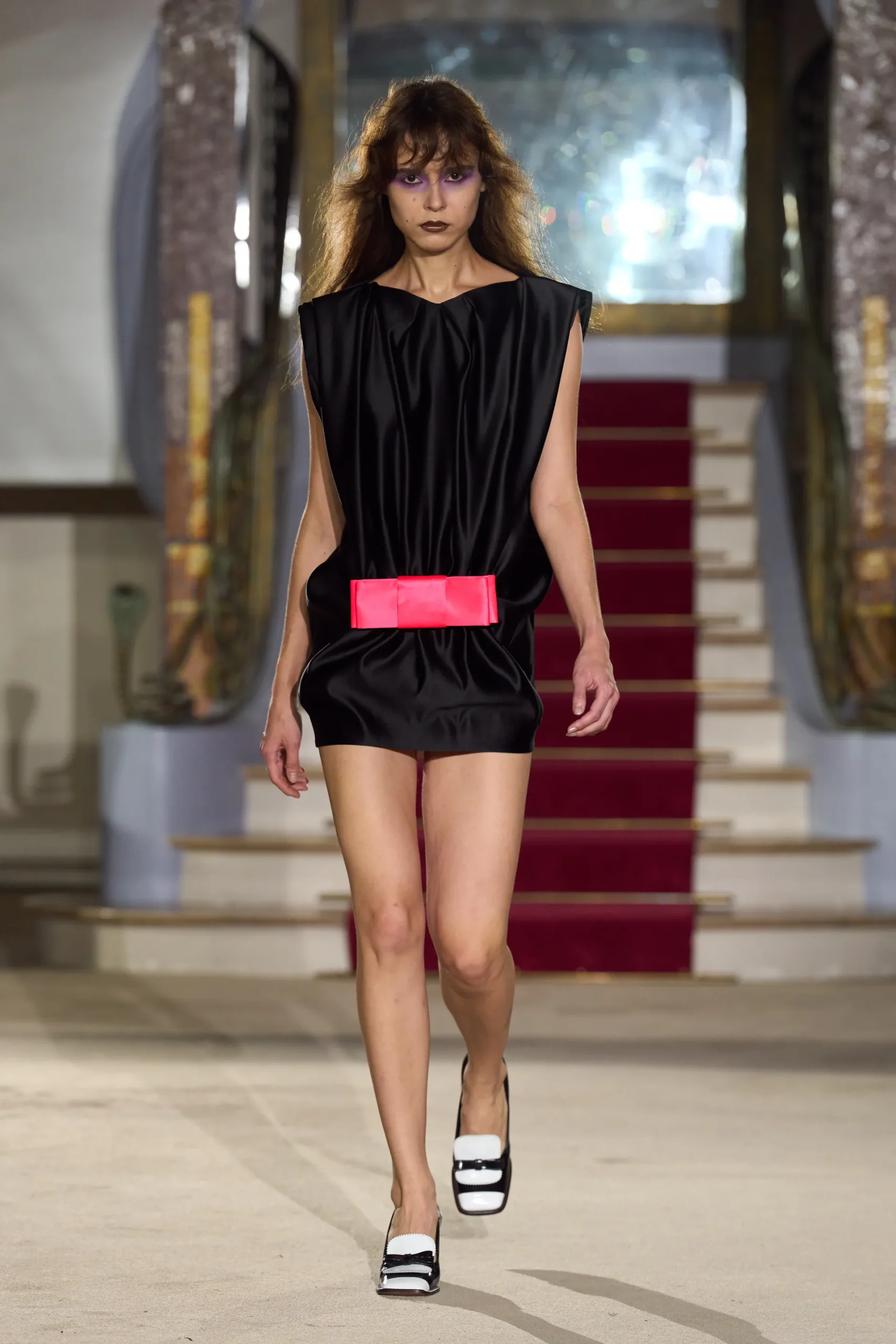

The designers closing the show with a karaoke-like duet to I Got You Babe, while five looks returned to the runway in different neon shades, emphasises Vaquera’s ethos of turning American glamour and pop culture into theatrical performance.
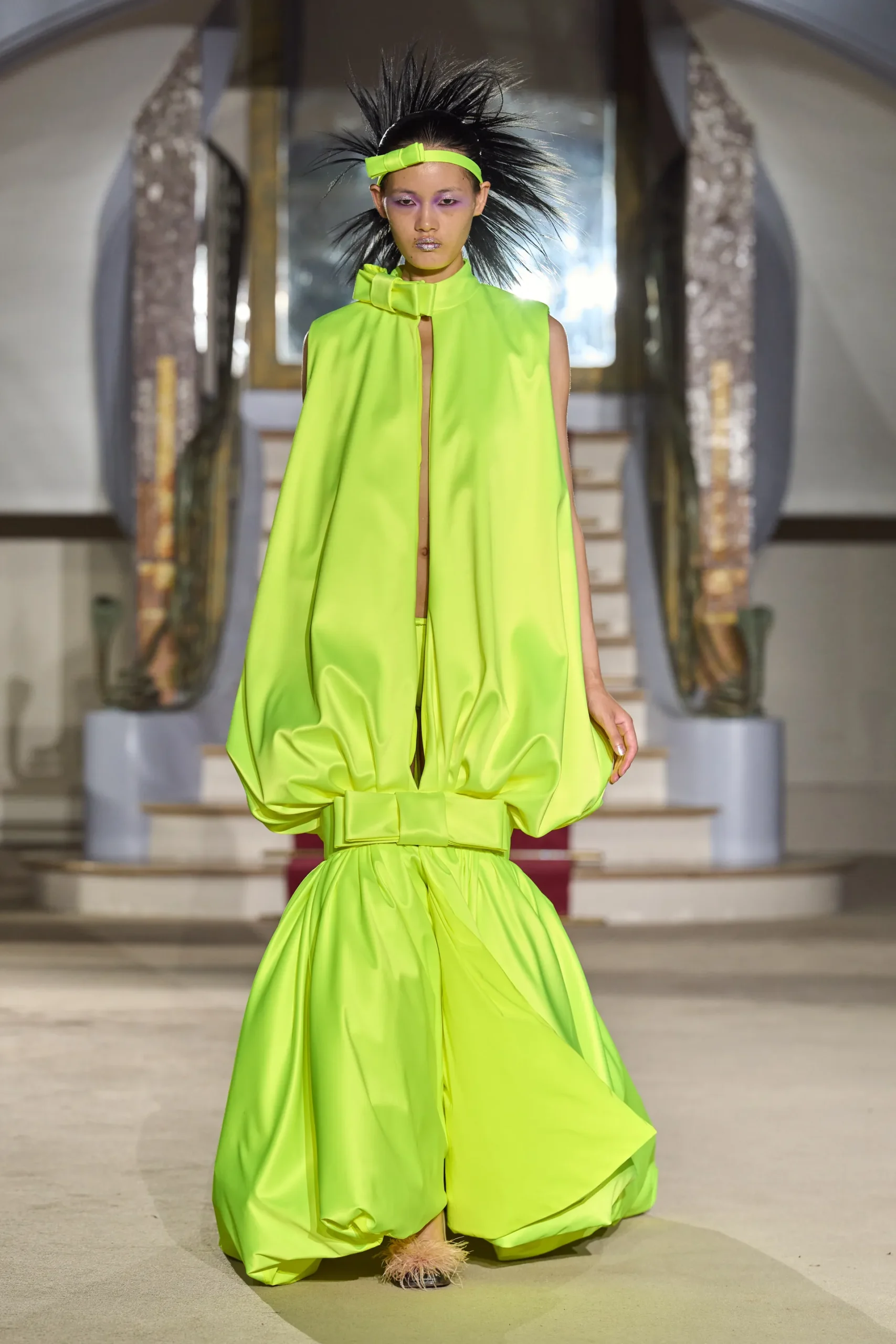
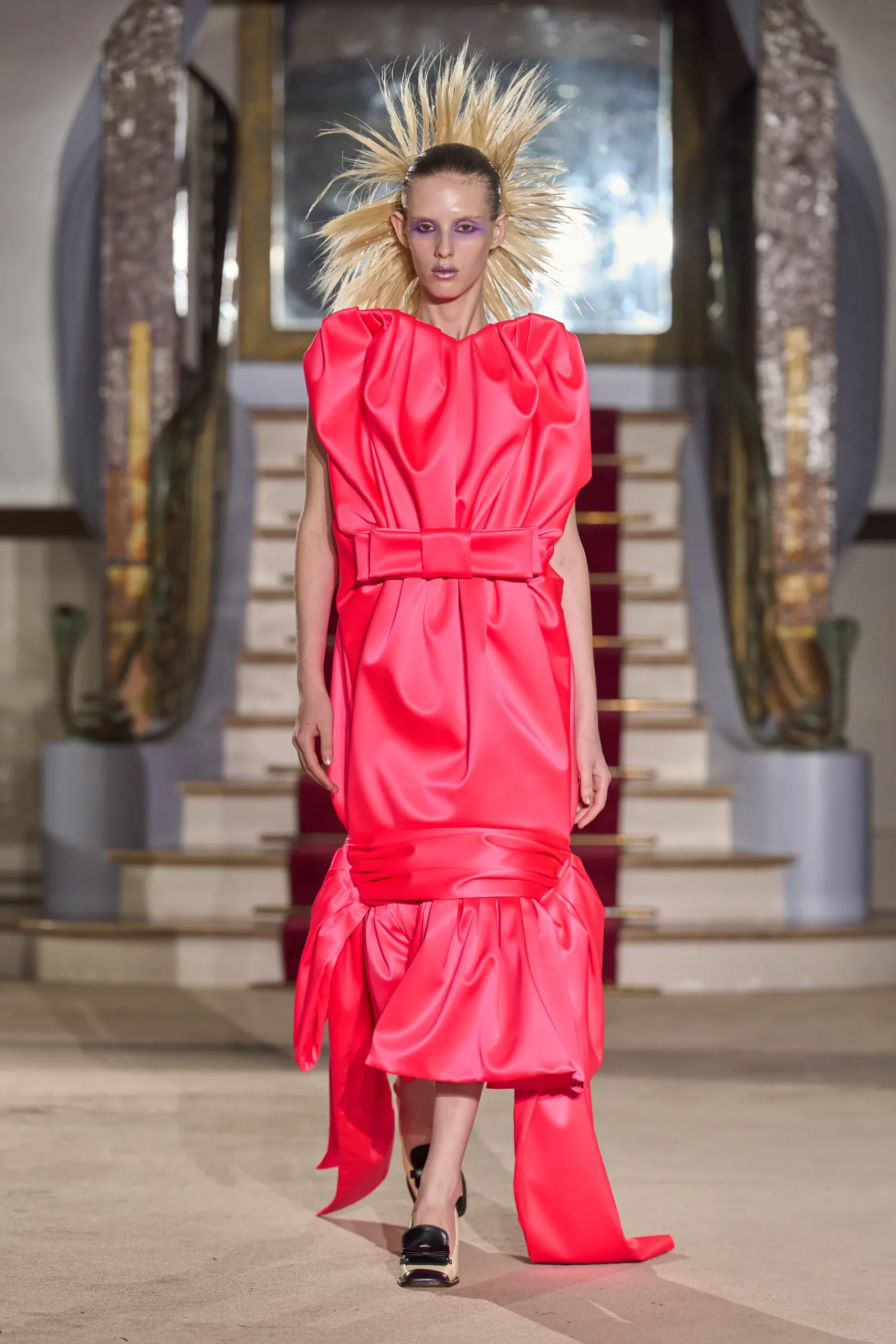
SS27 demonstrates how Vaquera uses fashion as antagonism: clothing becomes a form of confrontation. Traditional French codes are Americanised and distorted through punk attitude, creating a tension between elegance and rebellion. The result is fashion that does not simply seek to be beautiful; it challenges the viewer to question what beauty, femininity and glamour are supposed to look like.
Rick Owens: Femininity as Defiance

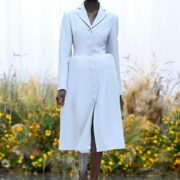
At Paris Fashion Week SS27, Rick Owens explored rebellion through the tension between the familiar and the otherworldly. Rather than relying on provocation alone, Owens questioned the boundaries through which we define beauty, using material, silhouette and movement to challenge the conventions of the human form.
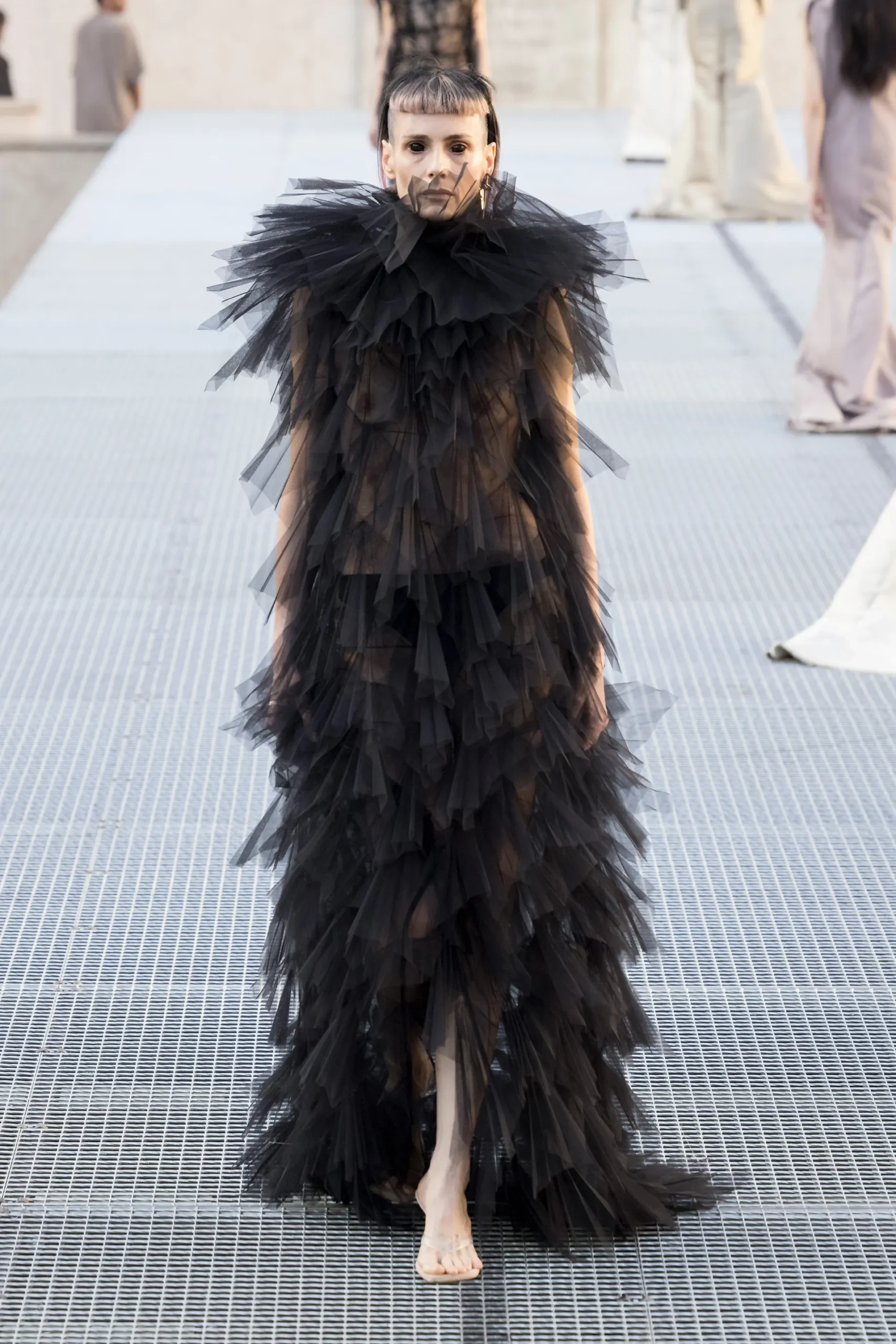
Upcycled industrial straps were reimagined as ceremonial gowns, while parachute silk introduced a sense of weightlessness against the collection’s more severe, architectural elements. Futuristic tulle silhouettes further complicated traditional notions of femininity, oscillating between fragility and strength, the sacred and the subversive.
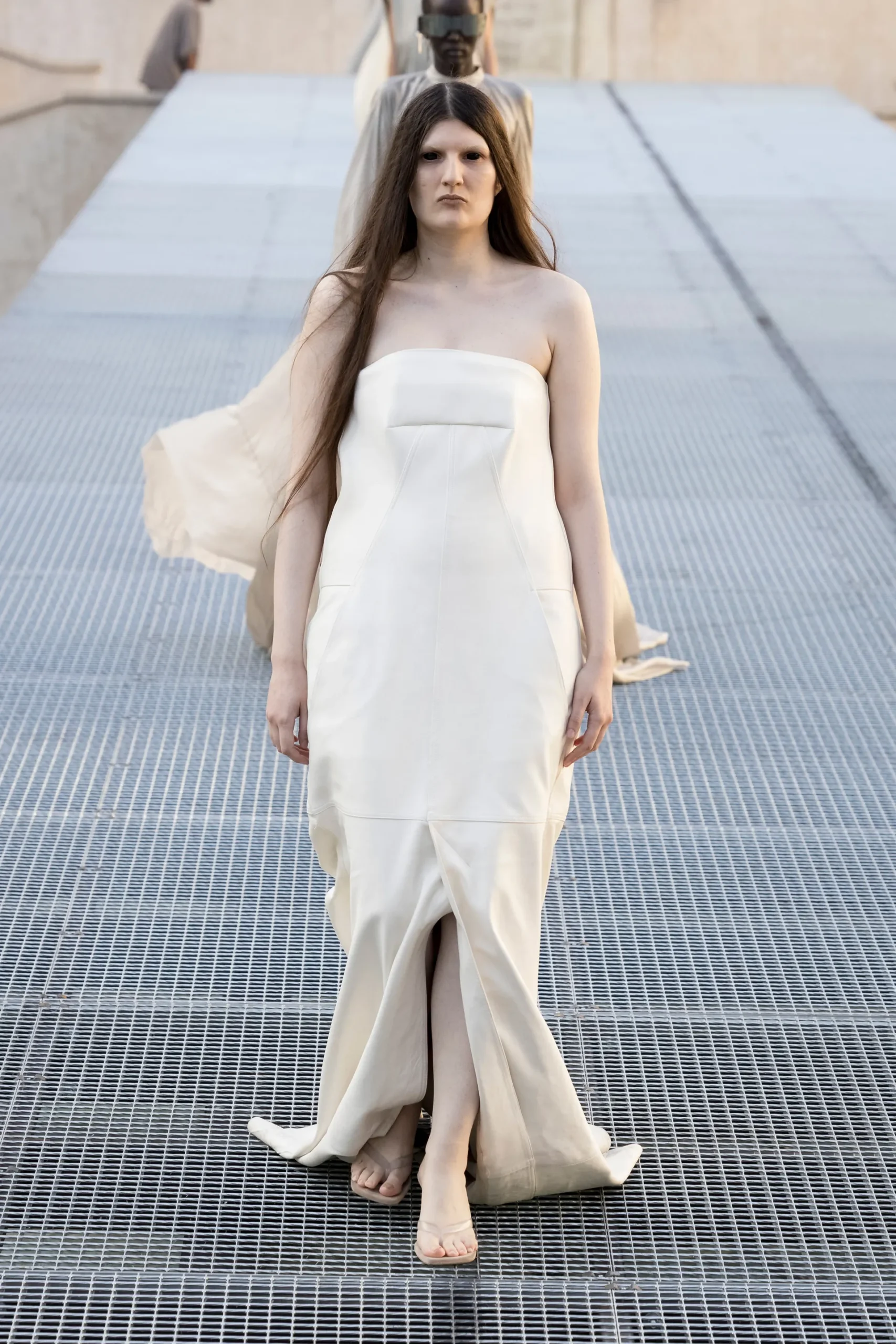
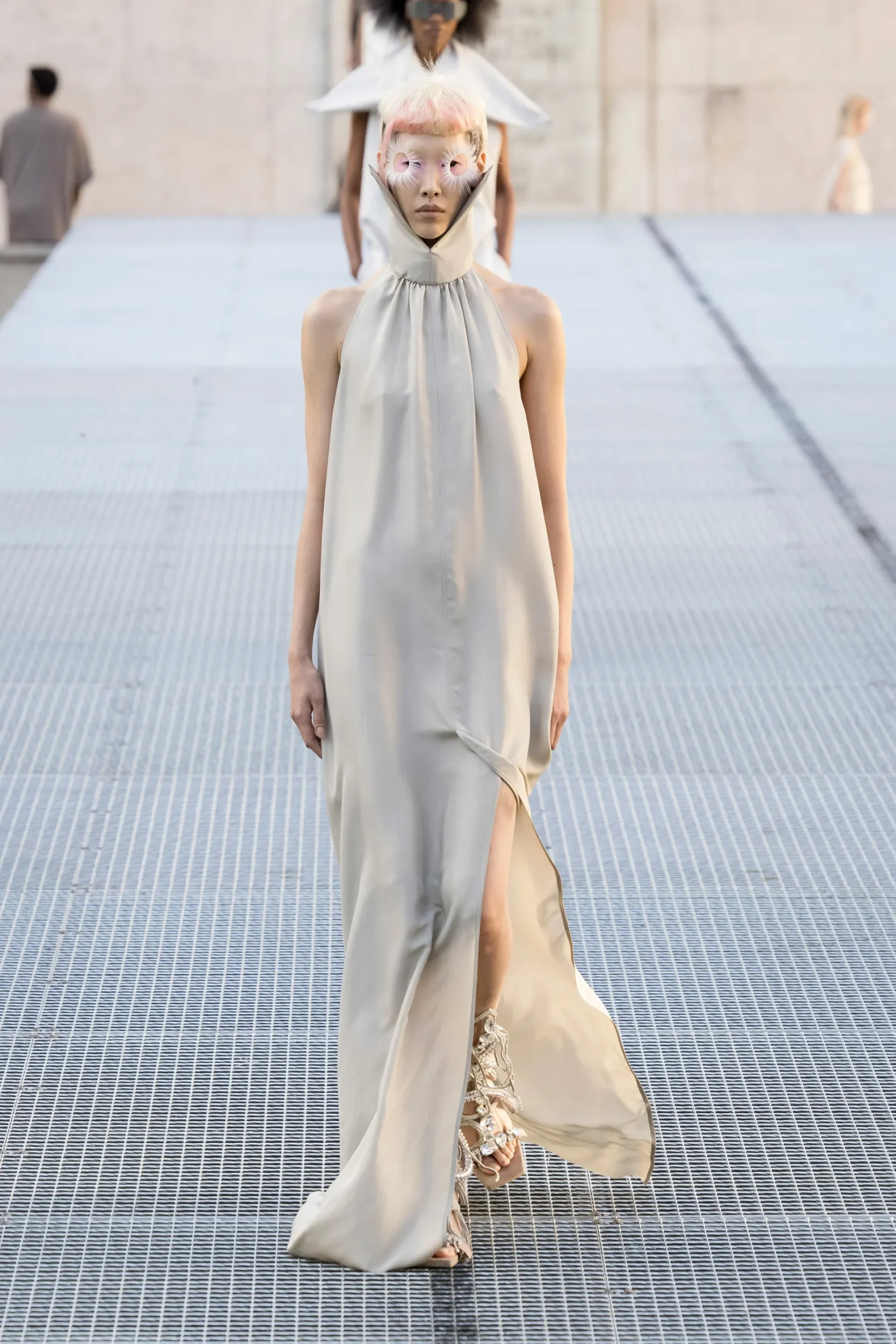


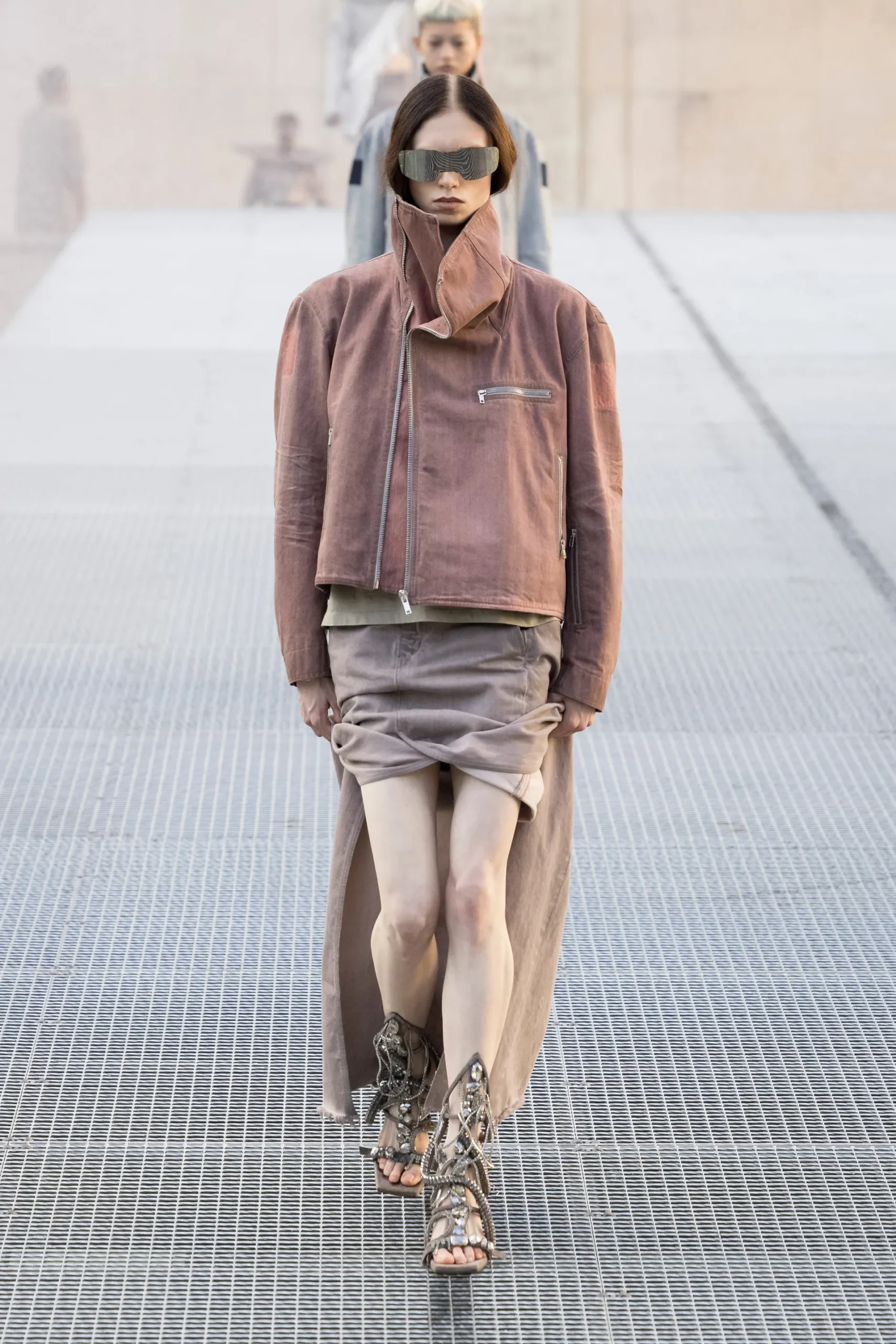

There is a quiet defiance in Owens’ refusal to make the unconventional palatable. His designs do not seek to reassure or conform; instead, they invite us to reconsider why certain bodies, shapes and aesthetics are celebrated while others are regarded as strange. Otherness becomes not something to overcome, but something to inhabit.
Within a season preoccupied with darkness, deconstruction and defiance, Owens offered a more introspective interpretation of rebellion. One that lies not simply in rejecting convention, but in questioning who establishes it in the first place.
Ottolinger: Deconstruction as Sensuality
Ottolinger’s Moisturizer collection for SS27 explores the sensuality of the human body. Models move through the collection with glossy, glowing skin, drawing attention to the parts of the body revealed through the clothing. Designers Christa Bösch and Cosima Gadient began with the simple ritual of applying moisturiser after waking up, expanding this intimate moment into a question of identity: who do you decide to become that day?

The collection uses peep holes to reveal glimpses of tattoos, while lace dresses cover only specific areas of the body, creating an erotic tension between skin and fabric. Here, deconstruction becomes sensual. The garment is not simply broken apart; it is reconstructed around the body in order to expose, touch and enhance it.
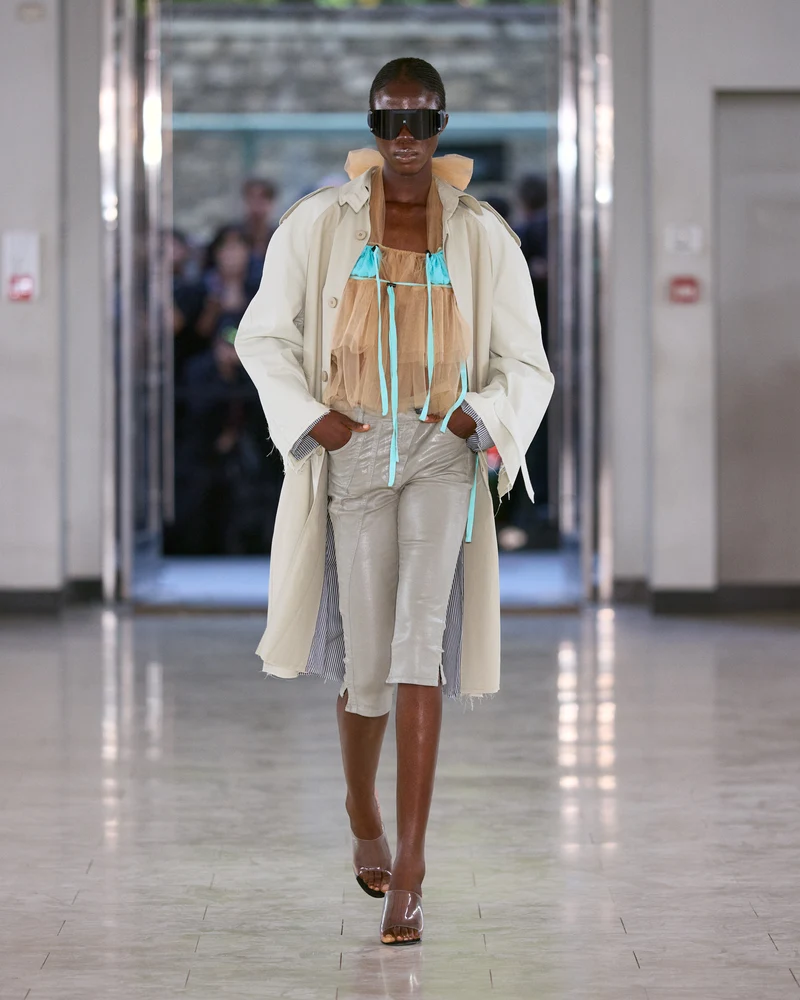
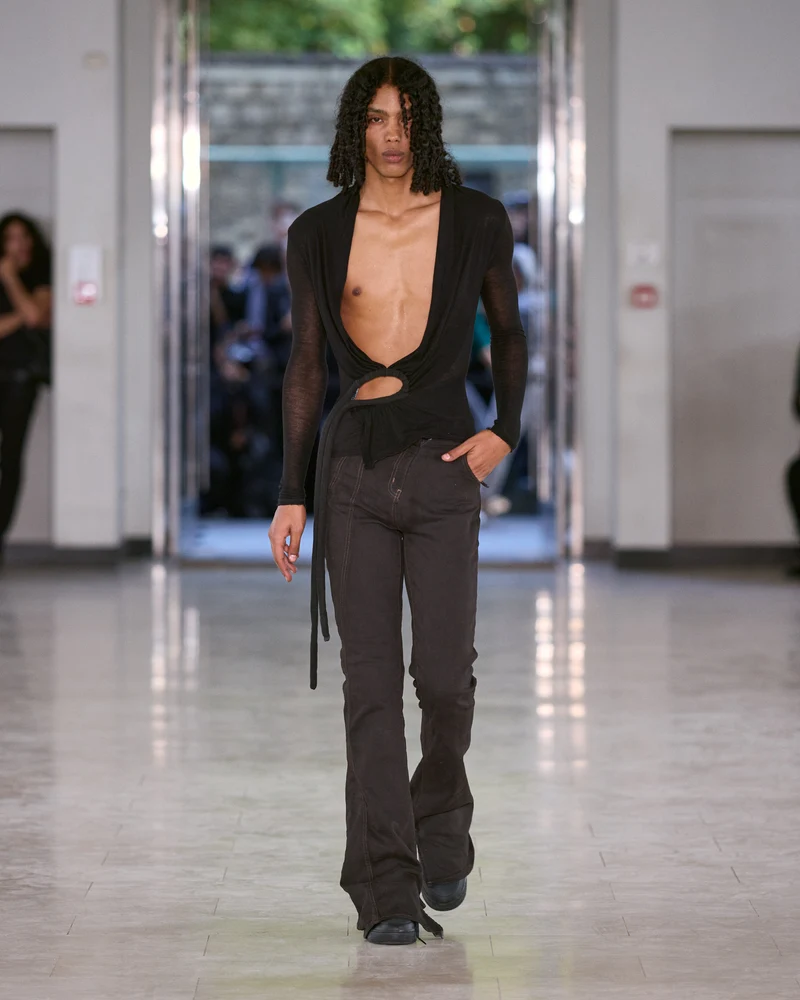

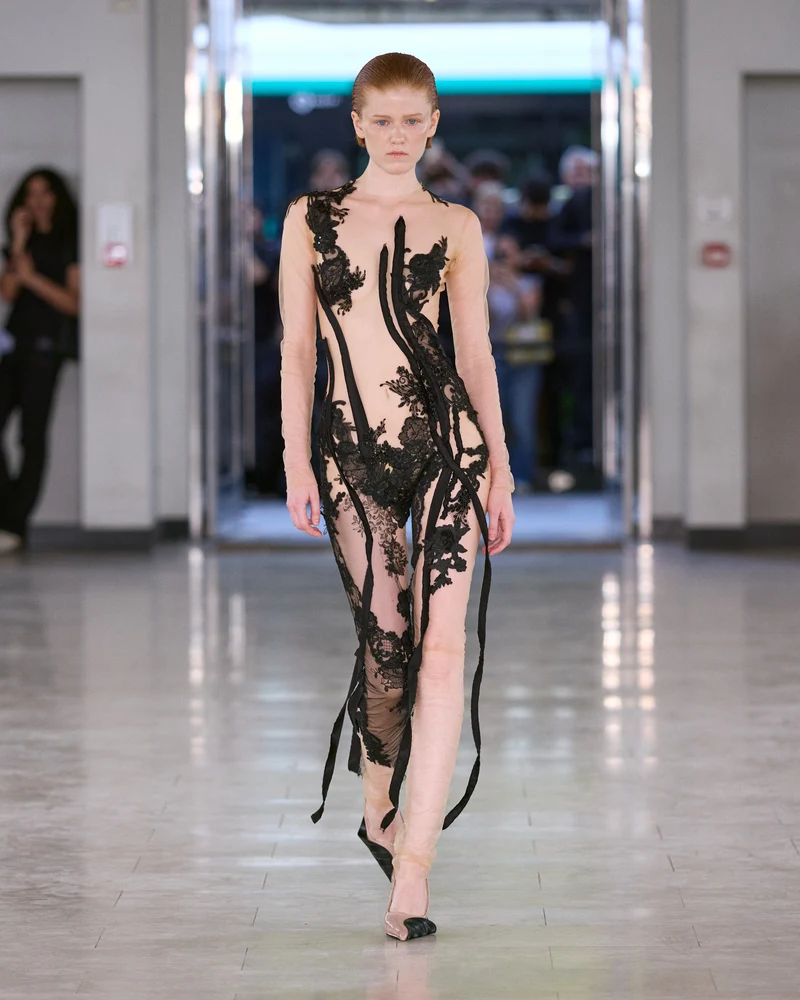
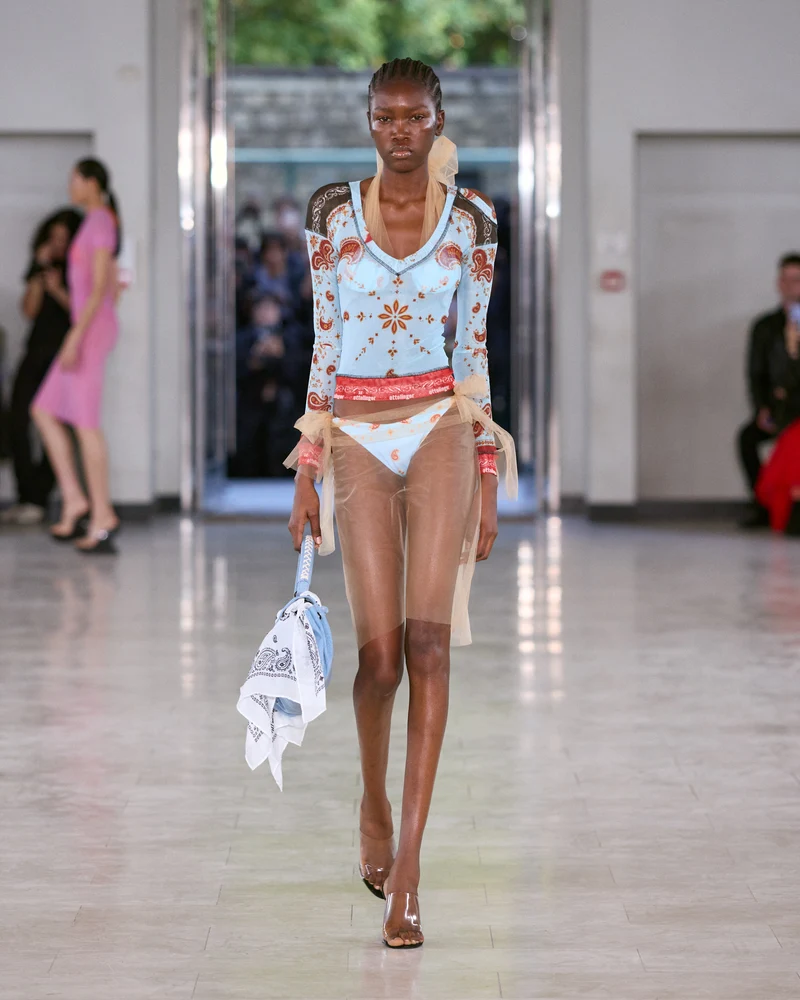
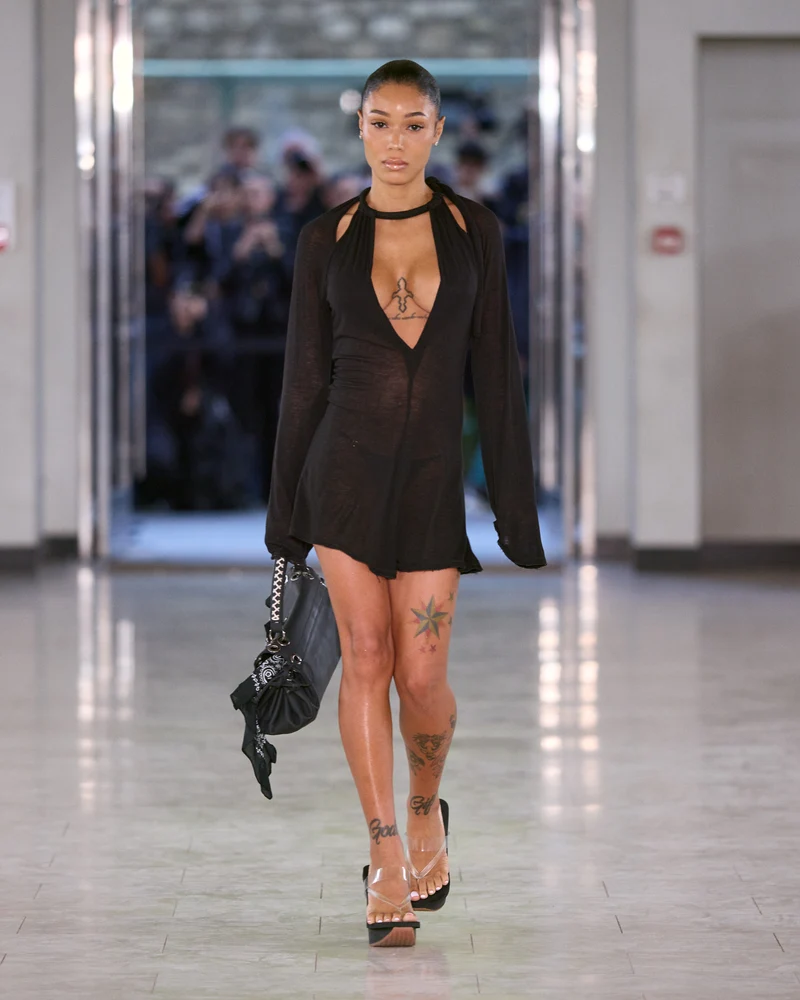
The Berlin-based label creates designs that work with the body rather than against it, accentuating its sensuality. Womenswear and menswear are presented alongside each other, while rapper Offset appears in a nude latex tracksuit, further blurring the boundaries between clothing, skin and performance.
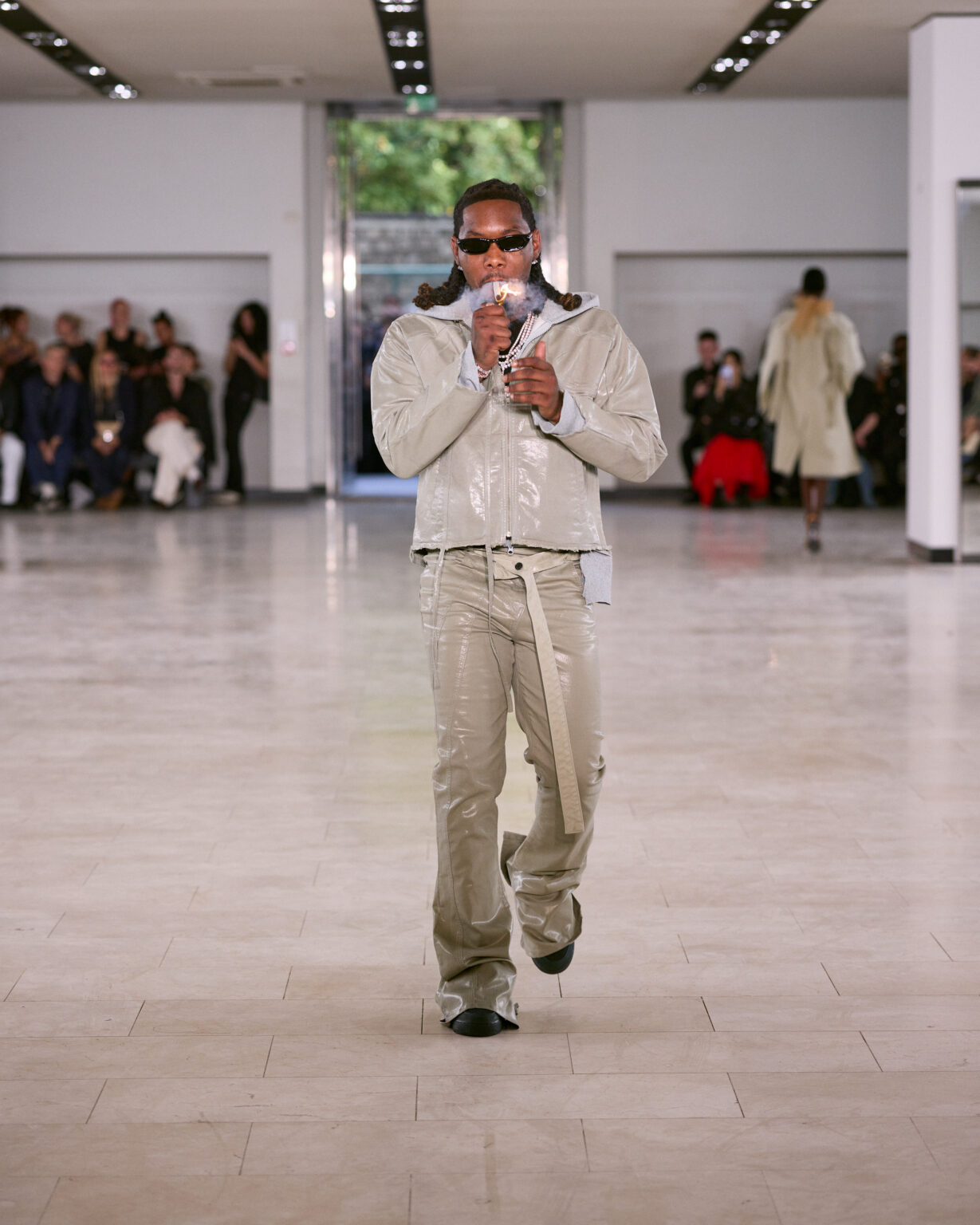
Leather, latex, exposed skin and muscular silhouettes create a highly physical form of sensuality. These garments make the body impossible to ignore. Yet this sensuality can also be read as darker: intimacy becomes exposure, desire becomes obsession, and clothing becomes something that grips and reveals the body.
Darkness therefore does not need to appear through overtly gothic or punk imagery. It can exist emotionally through desire, obsession, restraint, vulnerability and protection.
