






An organization championing women and gender diverse people in cinema with the mission to further their careers and reach equality within the entertainment industry is Women in Film (WIF). This year, the organization and Campari, a wine and spritz company, held an event at the Cannes Film Festival to celebrate women who are changing cinema in the Global South, such as WIFT Africa and WIF India.
Both WIFT Africa and WIF India have devoted their time to forming connections, mapping industries, and launching 10 more chapters worldwide in order to create an impact for women in the film industry.
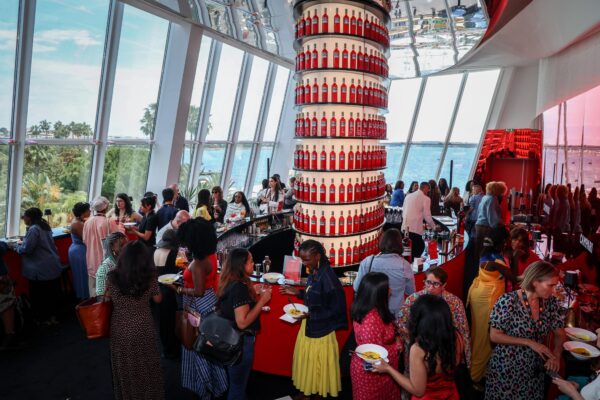
The event at Cannes was a pivotal moment for the organization, having that global stage with representatives from seven WIFT established chapters coming together, including Nigeria, Ghana, Kenya, Senegal, Cameroon, South Africa, and Zambia with leaders from up-and-coming chapters in Rwanda, Uganda, and Côte d’Ivoire. Each country came as one and formed a unified network that highlights the current infrastructure and the growing speed of African cinema.
Cannes highlighted the importance of having global connections and conversations to truly make a difference and create long-term visibility for women in film. This is key, especially in an industry where women are often overlooked and face obstacles to reach equal treatment and pay. Women in film have been fighting this battle for decades, with many starting to raise their voices and fight for equality. Now is the time to close the gap and create change by supporting women in the film industry.
I was able to speak with representatives from WIFT Africa and WIF India, Dr. Inya Lawal (Founder & President of Women in Film and Television Africa) and Rabia Chopra (Head of Women in Film India), on the organization’s initiatives to support women in the entertainment industry.
Style Cartel: Women in Film has been expanding its partnerships across Africa and India while launching new chapters around the world. Why do you think this is such an important moment for building a global network, and what impact do you hope they will have on women working in film?
Rabia: …. I think what we’ve recognized is that talent is not the problem; it’s the access. So that’s what we’ve been working on, and we’ve been able to build four pillars based on our study of what the real issues are, and those pillars are the 4 ‘E’s’ which we call education, exposure, employment, and exhibitions, and I think since our launch last year, we have been able to create opportunities for women, which is allowing them to come back and access those opportunities with more confidence and more knowledge, and you know…. we’ve grown a network of 3,500 members in India, and we have been constantly doing workshops. We’ve… impacted, you know, more than… 1000 women in the last year with all the programs that we’ve been running, and like we… took… six projects to the Toronto Film Festival last year, and out of those six projects, four projects are already in the making; they have already met their producers, their funders, and they’re already in the making. We have been doing resilience programs, which is really not about the numbers; it is about the impact it is making on how women build resilience and how they deal with rejections and issues that have been, you know, that have just killed patterns over the years. So I think the impact that we have been making is definitely showing to us in the last year. But I think this is work in progress, and I think the world will be able to see more impact in the coming years.
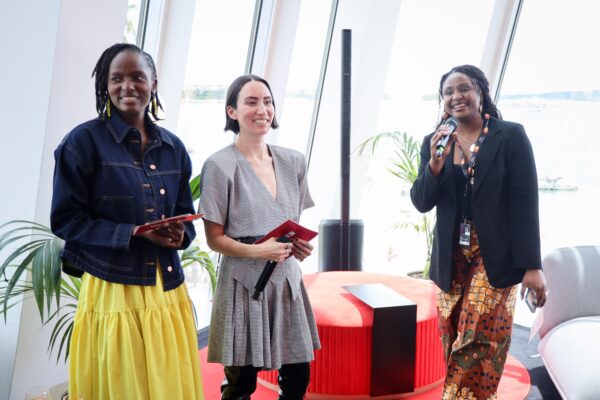
Inya: …So, for us, the movement of women in film is increasingly becoming global, interconnected, and representation… was very important for us when the network was created… There’s a lot of content coming from Africa. There are a lot of powerful women doing great things across the board from Africa. For us, what’s important is building a strong continental network that brings together national chapters, industry leaders, filmmakers, institutions, and international partners as well around a shared purpose. For us, ensuring that women are not only present in the industry, but they’re properly positioned to lead, and then they own and influence the industry as well. It’s very important to us. Economic prosperity is a major focus for us, so it’s just… beyond just networking. WIFT Africa currently connects women across different countries. Right now, we have chapters across Nigeria, Ghana, Kenya, South Africa, Senegal, Cameroon, and Zambia, and a couple of other chapters as well that are underway in other territories. Now, our expansion is very intentional because what we’re doing is creating a pan-African structure that respects the distinct realities of each country. It’s enabling women to access opportunities beyond their national borders.
Africa is not a country; as we always say, it’s a continent. So within all of these countries, there are unique issues that different women are trying to solve. Now, for us, [its] the growing engagement across Africa, and I’m glad India is here as well. And even you know, looking forward to partnering with countries like India is significant because the regions have dynamic film industries, and you know they have enormous audiences that we can take you know we can learn from, and we can access through each other. There’s potential for collaboration, co-production, talent exchanges as well, distribution partnerships, and our presence at Cannes this year demonstrated what becomes possible when networks are connected. So through our collaboration with you know WIF LA and all of the other chapters that are on were able to meet decision makers, participate in industry conversation, and position their work, the work of our members within the global film ecosystem. We also have a yearly conference that brings us together. We’ve just concluded… a conference, so for us, these are ways that we’re empowering. So it’s not one style, not one style of, you know, impact and whatnot. We have several gatherings that… we meet each other throughout the year. But what is most important for us is to make sure that… economic prosperity is, you know, at the top of everyone’s mind.
Style Cartel: This year’s Cannes delegation brought together representatives from established and emerging African chapters. What did having that collective presence on such an international stage represent for WIFT Africa and WIF India?
Inya: So for us, it just meant that the world will see that we’re there, right? People know we exist. You know, they know those chapters. These people exist. They recognize that industries are within Africa. I’ll speak on behalf of Africa. There are several, you know, industries, but people don’t really understand because, again, Africa is seen… [through] one lens. But coming to Cannes with the kind of delegation from different countries that we came from, and even from the diaspora as well, I think it really showed everybody that yeah, we’re powerful. It shows the power, you know, that we hold. That’s number one. Number two, for us, it meant that even if and when we’re not included, we could bring our table and create our own table, you know, in spaces like that. Number three, it meant that we were not also going to continue being left out of the conversation. We are now part of the conversation. In fact, we are the conversation because eventually we became the conversation in that way. So for us, being on a platform and not just Cannes. I mean, there will be other spaces where we will take. For us, it’s about taking space, making those spaces meaningful, and meeting with the right people who would ordinarily not come to us; we’re now going to them and saying to them, we exist. This is what we’re working on. Let’s collaborate. We’re here, basically. So that’s what that means for us going to Cannes.
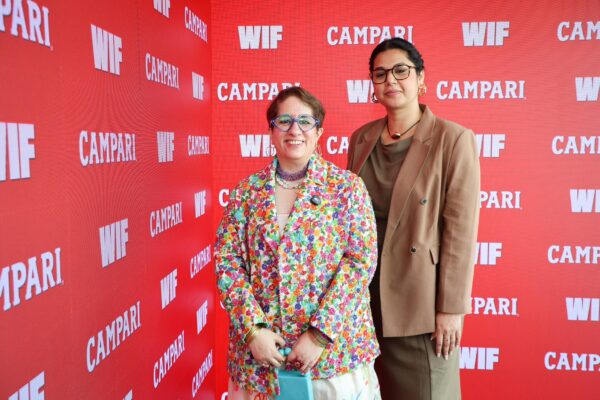
Rabia: …I totally agree with what she said… I think representation means visibility. And I think for decades, India has been one of the… world’s largest film industries. Yet women haven’t always had equal representation in the global conversations, which… [are] shaping the future of cinema. So, being at Cannes wasn’t just about attending a festival; it was about ensuring Indian women filmmakers, of course, had a seat at the table. And I think we’re moving towards building our own table. You know, from… constantly making sure this representation is consistent, and I think representation only matters if it creates opportunity. And Cannes has allowed us to move beyond just visibility, build relationships that have translated into, you know, mentorship, co-productions, financing, festival pathways, and international collaborations. I think even a single introduction at Cannes can become, you know, a film five years later. That’s why these spaces really matter. And I think coming from India, not just Cannes, but going to any film festival, it means a lot. It means a lot to begin with… to these filmmakers because it costs a lot.
It is also about creating more awareness of, you know, about these festivals that it is beyond having a film screened or premiered at the festival. It moves into networking events. It moves into labs. That is what we’ve been giving them exposure for. Last year we only took three women producers to attend the producers network breakfast, and this year we had an official collaboration… with the Impact Lab where we were able to reserve two spots for women filmmakers, so we took four women producers, and you know, I think it’s just seeing women from their own country represented on one of the world’s biggest stages sends a very powerful message that you know you belong here too. And so, while it is not just a milestone, I think it’s been a statement that the future of cinema will be built through global collaborations, and stories are no longer confined by borders, and neither should opportunities for the people who tell them, you know. So, yeah, a lot of credibility.
Style Cartel: When you talk about building new chapters, what does that actually look like on the ground? How do these local networks create meaningful opportunities for women across the film industry?
Inya: Okay. So the way we are, we’re a continental chapter, WIFT Africa. So we have planted several chapters across Africa, and they operate individually as their independent chapters. But then we, as WIFT Africa, also oversee a lot of activities there. What we offer is administrative support and structural support. So typically, how we set up some of those chapters is to identify women who are powerful within different countries and approach them. You know, sort of give them a background of the women in the film network, and give them also the admin structure of how it is formed. We usually advise starting with four people: president, vice president, secretary, and treasurer, and then from there they start growing their chapters in that way. But yeah, typically that’s how our makeup is, and it’s been really great because, you know, giving everyone independence to solve their own issues and problems, identify them, and, you know, also raise opportunities… within the country has been really helpful.
It’s also been, you know, a result of the… exponential growth that we’re having, you know, right now. We’re looking at at least 20 chapters before the end of the year. I know that’s very ambitious, but that’s how many people have reached out to say they would like to set up. We’re also learning year by year as well. WIFT Africa was founded in 2019 and between that time, end of 2019 and between that time and now, some of the early chapters have a lot of learnings that we’ve now implemented for the new and growing chapters as well. In that way, we’re growing; we’re learning. We’re structured in a way that everyone is independent, but then we still work together. And every year we gather for our conference. I mean, outside of gathering at other places… we gather as well to have, you know, a WIFT Africa conference. That’s basically it. How we’re structured.
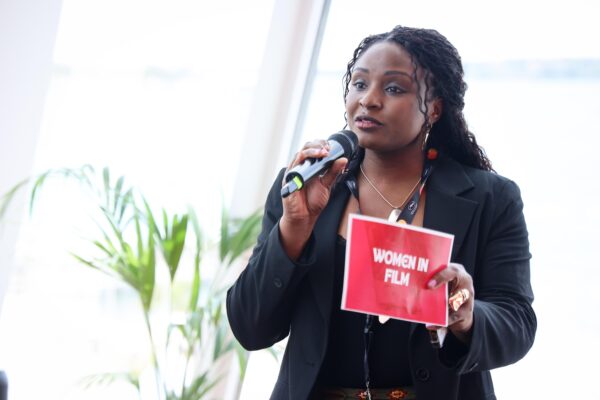
Rabia: So amazing, Inya. I think we need to speak and we need to exchange notes because we’ve just started off here. And yeah, I think you know the biggest change that I see, you know, with women in film networks across the globe is that this conversation really matters now, you know, and especially for India, a few years ago, gender equality [in] income was such a niche conversation, and today it’s happening at, you know, it’s happening at festivals, it’s happening at studios, governments, and across global industries, you know, and India is the largest film-producing country in the world. We’re making over 2000 films every year across multiple languages, and yet women remain significantly underrepresented behind the camera. And it’s a shameful number of, you know, directors being under 3%, cinematographers under 2%. Overall, it’s nothing above 12% and I think we’ve realized you know the why of the importance of WIF India. So we’re building opportunities, connections, and, you know, a support system for women across the industry.
And I think like I talked about, you know, our four pillars, which we have carefully designed to ensure that everything is covered, and I think also these pillars are so aligned with what India needs today across the country. There are young people asking for better education, more opportunities, and a fair chance to build meaningful careers, and you know we are a very, very small team. It’s literally like two [or] three of us putting this together, working on stipends. It’s very hard to raise funds in India. Philanthropy is not something that’s very well understood or cared for. So we’ve been struggling, but we’ve come a long way from, you know, pulling money from here and there to actually get to Cannes last year. We had a brand on board this year that sponsored us, who gave us clothes to wear, and so we’ve come a long way in the last year, and I’m really looking forward to the potential of this and listening to Inya, seeing the progress of the WIF LA. Of course, we’re very hopeful for the future, and I think we’re building something amazing. You know, the power of women in film is that… the network that it’s created globally is unmatched. You know, you go anywhere in the world, and you’re represented. You know, as women in film, there is no need for a nice breakoff, you know. The conversation just started. So yeah, I think this is how it looks for us.
Style Cartel: What are some of the biggest barriers women in film still face in Africa and India today, and where are you seeing the greatest progress?
Inya: ….They’re couple outside of the you know the usual… I also happen to have a foundation so the foundation has been helping a lot in funding a lot of the things that we do at Women in Film But you know finance is always you know having your finance structure in a way that you’re able to, you know, be sustainable and still give the kind of assistance that you need to give within, you know, to women within your network is definitely one one of those barriers. I think that, you know, for a lot of organizations, they also want to see the work that you’ve done in order to know whether they need to fund you and whatnot. So before you get there, there are so many sacrifices that need to be made, you know, before you get to that point. But I’m glad that we’re breaking forth, you know, on our end. My organization, primarily an NGO, has funded, you know, a lot of the things that we’ve done, even with staffing as well, being able to assist with staff.
I think that another challenge is, you know, just basically empowering women with the knowledge that is needed to run an organization, right? A lot of those people who are coming on board are coming on board as volunteers. Some of them are producers who have come on board as volunteers and have no knowledge whatsoever… on how to run an organization or an NGO, depending on the structure of registration. So we found that challenge as well. That, you know, sometimes people begin, and then they get overwhelmed because there’s the reality of them making an income, you know, for themselves, but at the same time running those organizations and carrying all of the other women along. This year we were able to get some assistance to get a specialist, a consultant who did some sessions with all of the chapter leaders, you know, on how to run an organization. We found that really helpful because then, you know, they’re able to build their business plans or their, you know, their plans to raise funding by themselves. So that is usually a major one…I would call it a structural barrier, you know, in that way-because you have people who just want to do good, but they don’t have the knowledge, you know, on how to run that sort of organization side by side, growing their own careers and other people helping other people as well.
The other issues and barriers are just, you know, the general industry issues that people face [when] owning your own. I think that one big thing, and you know, at the conference this year, I know all of the chapters made a declaration to even come together, you know, and own content together. I think owning your own projects where you have creative control, you also have the economic control is one barrier that I know that you know people face, and more and more we are tilting now towards raising or raising finance to establish a fund for women. You know, in a way, we can also be the ones controlling that fund, and it becomes a revolving fund that people can borrow from, you know, in that way to start solving those problems. So that’s one. In terms of the progress we’ve made, I would say the biggest progress we’ve made is establishing our WIFT Africa platform. To us, this is an infrastructure that is like your IFDB meets LinkedIn, you know, a platform for us where women can connect. It streamlines everything we’re doing and makes it so much easier. Rather than sending tons of emails to everybody, we can just bunch everybody together and communicate with everyone. If someone has an announcement, opportunity, they can post it on the platform, you know.
So with that tech infrastructure that we have, for me, I feel like it’s you know it’s the greatest achievements that we’ve had you know this year, and the plans that we have for it as well. I’m very excited to see how we continue to build where that becomes the go-to platform when you need anything whatsoever, resource, you know, information, you know, job calls, opportunities, network, and whatnot. You have that platform to go to. So yeah, over to you, Rabia.
Rabia: Thank you, Inya. I think the barriers are both external and internal, and I think, talking about external barriers, I think it’s for a young organization; there is informal hiring networks. You know, limited access to funding. You know, and I think the biggest barrier we’ve been seeing from when we started is women leaving the industry in mid-career, and I think that’s what we started working [for]. That’s why we started working on Women in Film, you know, creating that access and opportunity for women who have to build families and keep up with work. I think that was the initial thought of why we started, and I think that still remains as a barrier, and I think, to be honest, I mean we’re a young organization, so actually our biggest challenge is scaling our impact. You know, building sustainable funding, so programs don’t depend on just one sponsor. This has been an ongoing barrier. We have to reach beyond Mumbai. We work hard in Mumbai, and there, and you know, to be able to make Women in Film truly national. It’s not enough to bring people together. We have to help them to get work. So, turning community into measurable employment has been a barrier. That’s what we’ve been working on: building trust, so studios, producers, and brands see that WIF India is here to stay. It’s a long-term industry partner.
You know, we’re we’re we’re just only beginning right now, and you know, moving from momentum to institution, really institutional building at this point of time, and building a structure that stays that is sustainable through funding, partnership programs, measurable outcomes. Of course, that’s the exciting part, and we hope that you know we’re building an institution that we hope will serve women in film for decades. You know, it’s a long-term plan. So, looking at everything, working on everything from this lens, you know, and constantly reminding ourselves that this… is why we started. I think that is something that we need to constantly work on. And I think the biggest challenge for any young organization is really proving that it can outlive its founders. That’s what we’re building now: a platform that becomes part of the industry’s infrastructure, not just another initiative. So I think everything, every barrier that comes in the way internally or externally to make all this happen, are the true barriers for us.
Follow Style Cartel on TikTok and Instagram! And read more about Culture here!
