

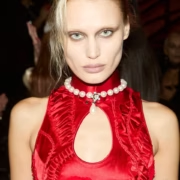
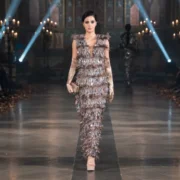
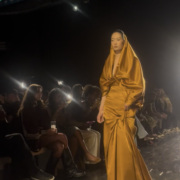
Welcome fashion divas and divos! We’re back again at London Fashion Week, speaking to the designers challenging how we think about fashion, identity and self-expression. This time, we sit down with RAY CHU to discuss the label’s Spring/Summer 2027 collection, inspired by Taiwan’s Sambucus flower and the strength that emerges when individuals come together. From intricate Swarovski embellishments to gender-fluid silhouettes, the collection brings cultural heritage into a contemporary conversation about belonging, craftsmanship and personal identity. Make sure you’re following StyleCartel on Instagram and TikTok for more exclusive designer interviews, runway highlights and fashion-week coverage.
The Sambucus Flower: Finding Strength in Togetherness
At the heart of RAY CHU’s SS27 collection is a flower with a deeply personal significance. The Sambucus flower, native to Taiwan, became the starting point for a collection exploring how something delicate can become powerful through connection.
“What drew me to the Sambucus flower is that each individual flower is incredibly small and delicate, but when they come together, they form this much stronger and more powerful presence,” Chu explains. “I really connected with that idea of strength through togetherness.”
The inspiration is rooted in the designer’s own background, giving the collection a connection to home while opening up a wider conversation about community and identity.
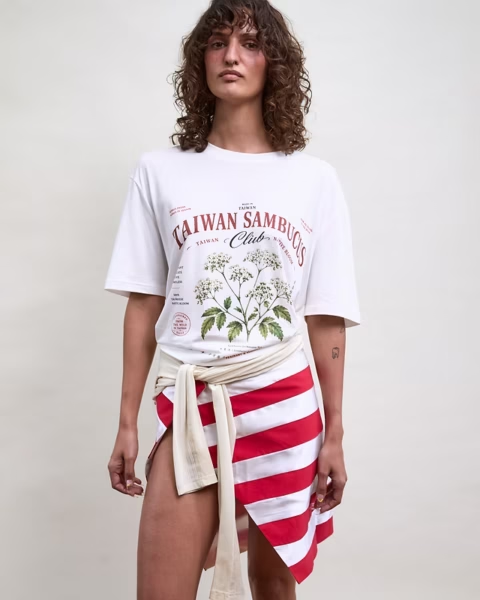
“It is also a plant native to Taiwan, where I come from, so there was a very personal connection for me,” Chu tells us. “I wanted to take something quiet and perhaps easily overlooked, and give it a stronger voice through the collection.”
It is a philosophy that runs throughout the collection. Rather than relying on one oversized statement, Chu explores how individual details can gain significance through repetition, placement and their relationship with the wider design.
From Floral Clusters to Fashion Statements
Translating the Sambucus flower into clothing meant finding a fresh approach to botanical design. Following the label’s exploration of three-dimensional floral elements through 3D printing for SS25, Chu wanted to develop the concept in a different direction for SS27.
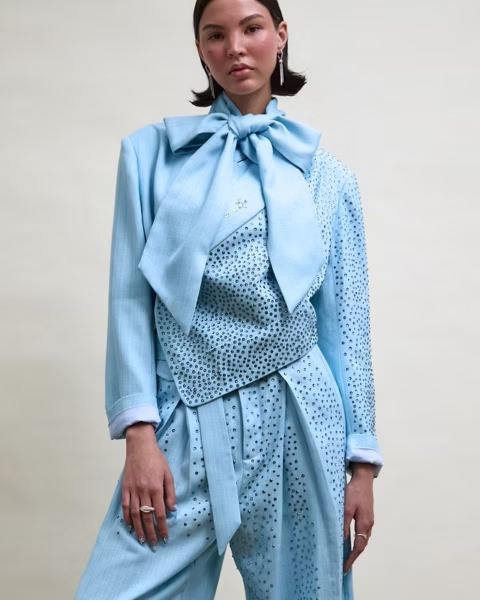
“With the support of Swarovski, we combined floral embellishment with Swarovski ReCreated™ Crystals, building clusters across the garments almost like flowers coming together or droplets gathering on a surface,” Chu explains. “We also developed the Sambucus idea through our graphic prints and repeated botanical elements.”
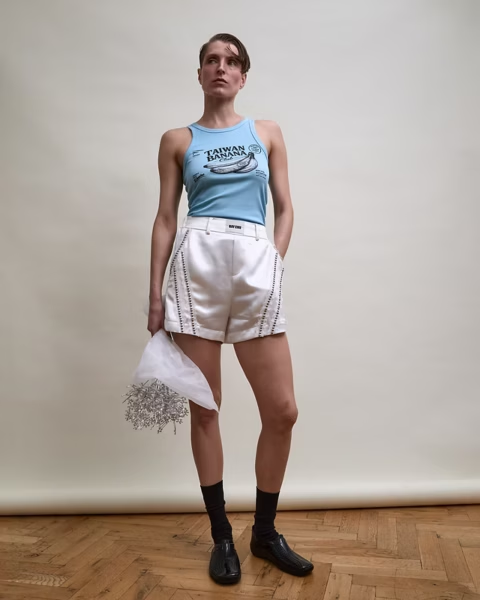
The embellishments give a physical expression to the collection’s central idea. Individual crystals and floral elements come together to create a larger visual statement, echoing the natural arrangement of the flower itself.
Achieving that effect, however, required considerable precision.
“In terms of time and craftsmanship, definitely the Swarovski look. It took us around two weeks just to refine the placement of the crystals and floral elements,” Chu reveals.
“We didn’t want the embellishment to feel random or overly decorative. The balance, spacing and gradual clustering were very important, so we kept adjusting everything until the flowers and crystals felt organically connected to the silhouette.”
The result is an approach to embellishment in which craftsmanship supports the concept, rather than simply decorating the garment.
Bringing Taiwan to London Fashion Week
Cultural identity remains central to RAY CHU’s design language. Presenting the collection in London gives the designer an opportunity to bring Taiwanese references into an international fashion conversation without reducing them to nostalgia.
“It is extremely important to me,” Chu says when asked about bringing a piece of Taiwan to London Fashion Week. “London Fashion Week brings together designers from so many different cultural backgrounds, and I think one of the most interesting things is seeing how designers bring their own roots and identities into an international context.”
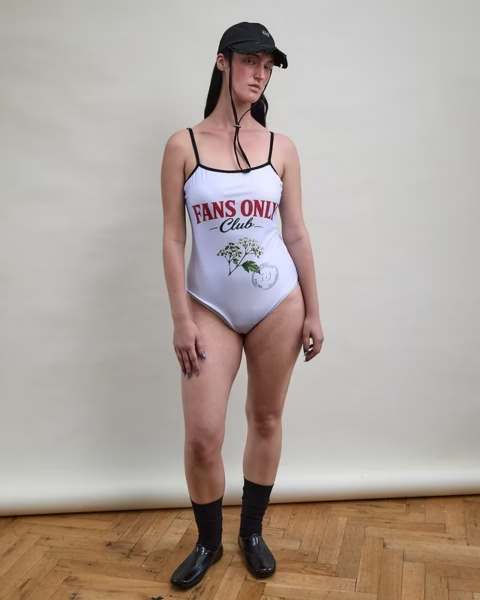
Chu points to designers such as Chet Lo and Ahluwalia as examples of how personal heritage can contribute to contemporary fashion.
“For me, being Taiwanese is naturally part of my design language, so I want to introduce elements of Taiwan in a contemporary way rather than treating them as something traditional or nostalgic,” Chu explains.
“It is about showing where I come from while allowing those references to evolve into something global and very RAY CHU.”
This distinction is important. Rather than treating heritage as something fixed in the past, Chu approaches it as a living influence that can evolve through new materials, techniques and silhouettes. The Sambucus flower is both a personal reference and a symbol with a message that extends beyond geographical boundaries.
Gender Fluidity and the Freedom to Express Yourself
Alongside its exploration of cultural identity, RAY CHU SS27 considers how clothing can create space for individual expression. Gender fluidity is not an additional theme imposed on the collection; it is embedded in the designer’s approach to silhouette from the outset.
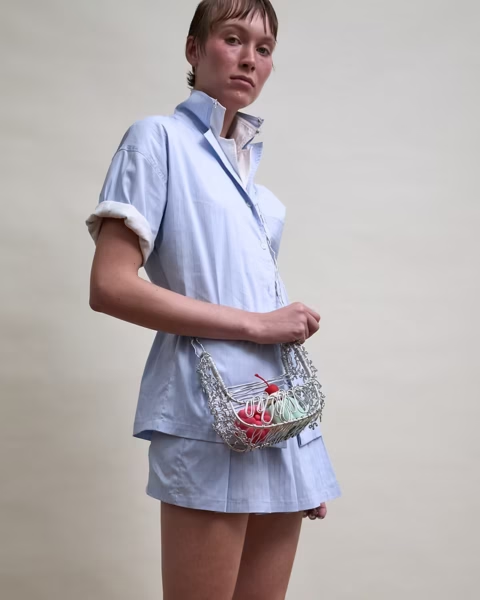
“Gender fluidity is very natural to the way I design,” Chu tells us. “I don’t normally begin a piece by deciding that it has to be specifically menswear or womenswear. I think more about the body, proportion, attitude and how someone might want to express themselves in that garment.”
This approach allows traditionally masculine and feminine design codes to coexist. Sharp tailoring can meet transparency, structured proportions can sit alongside body-conscious silhouettes, and softer details can transform more architectural shapes.
For Chu, the aim is not to erase distinctions between masculinity and femininity, but to allow both to exist without prescribing how a garment should be worn.
“For me, gender fluidity isn’t about removing femininity or masculinity. It is about allowing both to exist at the same time and giving the wearer the freedom to decide how they want the clothes to represent them.”
It is a perspective that places the wearer at the centre of the design process. Instead of assigning clothing to predetermined identities, RAY CHU offers room for personal interpretation.
Swarovski ReCreated™ Crystals: Where Craft Meets Sustainability
The collection’s relationship with Swarovski also opens up a conversation about sustainability and the future of embellishment. For Chu, responsible material choices are becoming increasingly important, but they must work alongside the creative ambitions of the design.
“It is becoming more and more important for us,” Chu says. “Sustainability has always been something we explore through materials, but I also want sustainable choices to feel desirable and visually exciting rather than becoming a limitation on the design.”
The collection uses Swarovski ReCreated™ Crystals, which are made using crystal manufacturing breakage, introducing a circular element into the material choice.
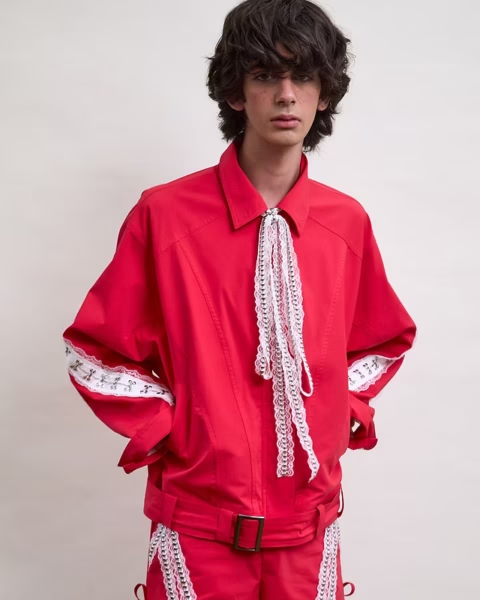
“That is why I wanted the majority of the crystals we used in the collection to be Swarovski ReCreated™ Crystals,” Chu explains. “They are made using crystal manufacturing breakage, so there is a circular element behind the material, while still allowing us to achieve the precision, light and craftsmanship that were important to this particular collection.”
For Chu, sustainability is not about compromising the visual impact of a design. It is about finding ways for responsible material choices and creative ambition to support one another.
“For me, the future is about finding ways for craftsmanship, innovation and responsibility to exist together.”
The RAY CHU Club: Building a Community Through Fashion
Beyond the individual garments, the collection also develops the idea of the RAY CHU Club — a concept centred on belonging, shared identity and the freedom to be different.
“There is also a wider idea of community running through the collection,” Chu explains. “We have been developing this idea of the RAY CHU Club — almost like creating a space where different people, identities and personalities can belong together.”
The concept echoes the Sambucus flower, with its individual blooms forming a more powerful whole.
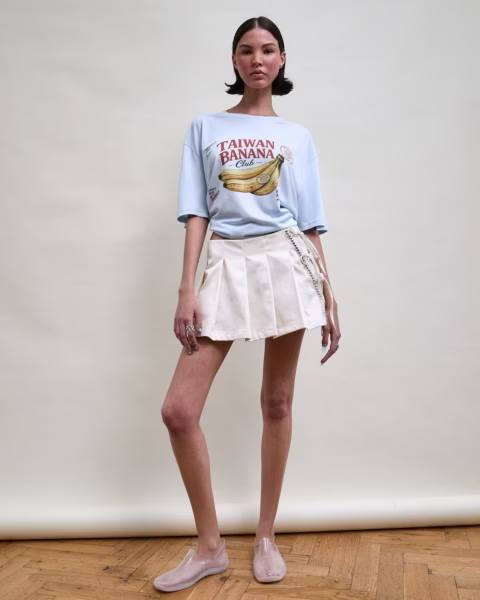
“Individually everyone has their own character, but collectively there is strength,” Chu says.
This idea brings together the collection’s different themes. Taiwanese identity, gender fluidity and sustainability may each represent a distinct part of the designer’s vision, but they share an underlying interest in connection: to cultural roots, to personal expression, to materials and to other people.
Through the RAY CHU Club, fashion becomes more than an individual aesthetic. It becomes a potential meeting point where people can share a sense of belonging without having to surrender what makes them unique.
“Sometimes Strength Comes From Knowing Who You Are”
As our conversation comes to a close, we ask Chu what feeling they hope audiences take away from the collection. The answer returns to the flower that started it all.
“I would want people to leave with a feeling of quiet strength,” Chu tells us.
“The Sambucus flower is very small and delicate on its own, but when hundreds of flowers gather together, they become something much more powerful. I think that reflects how I feel about identity, community and even the RAY CHU world.”
In an industry often driven by spectacle and the pressure to make the loudest possible statement, Chu offers a different understanding of power.
“You don’t always need to be the loudest person in the room to have strength,” the designer reflects. “Sometimes strength comes from knowing who you are, finding the people you connect with, and allowing those individual identities to become stronger together.”
It is a fitting conclusion to a collection that places individuality and belonging side by side. Through its botanical embellishments, Taiwanese references and gender-fluid silhouettes, RAY CHU SS27 proposes that identity does not have to be isolated or prescribed. It can evolve through connection.
The takeaway? RAY CHU’s Spring/Summer 2027 collection celebrates what happens when cultural heritage, craftsmanship and personal expression come together. The Sambucus flower may be delicate, but its message is anything but: sometimes, our greatest strength comes from embracing our individuality while finding the people and communities that make us stronger.
Photo credits: 5elevenmag, https://www.5elevenmag.com/post/ray-chu-ss27