




Fortune hosted its annual Most Powerful Women Summit in Washington, D.C. this year, a three-day summit from October 13-15. The Fortune Most Powerful Women is a platform that allows women entrepreneurs to have raw, transparent conversations about the challenges they face throughout their businesses. According to Fortune, The Most Powerful Women (MPW) franchise began in 1998.
This year’s theme was Leading in a Dynamic World, with conversations focused on how leaders are responding to global changes while driving their businesses and society forward, as explained by Fortune. These conversations were led by Fortune’s journalists, shedding light on the current business landscape and the new leadership models that are transforming the future.
I had the pleasure of attending the summit’s final day on Wednesday, October 15th. Leaders such as Dina Powell McCormick, Fran Horowitz, Sophie Goldschmidt, Libby Wadle, Amy Coleman, Karin Klein, Jessica Wu, Jenny Wang, Meredith Koop, Selena Gomez, and Elyse Cohen took the stage with in-depth conversations.
Mentorship: Dina Powell McCormick
The summit opened up with a conversation with Dina Powell McCormick, Vice Chairman and President of Global Client Services, and serves as a partner at BDT-MSD. McCormick recently became an author with the publication of her book, Who Believed in You?, which focuses on mentorship. Michal Lev-Ram, a contributing editor at Fortune, led the conversation on mentorship, as McCormick explains how, through feedback, mentors can shape a person and help them grow. There is true power in investing in a person and guiding them to their purpose in life. McCormick continues to explain the importance of “transformational mentorship,” which lasts a lifetime and shapes one’s “professional” and “personal” sides. She further makes a powerful statement that encourages entrepreneurs to understand that, to reach “success,” “failure” must first occur. This is not only true in business but also in life, as one must understand.
Abercrombie & Fitch Co: Fran Horowitz
Emma Hinchliffe, Cochair of Fortune MPW Summit, and Fran Horowitz, Chief Executive Officer of Abercrombie & Fitch Co., sit down to discuss the process of reinventing Abercrombie. Horowitz explains that she joined the company in 2011 as President of Hollister and found the brand struggling. Both Abercrombie and Hollister, operated by Abercrombie & Fitch Co., were not differentiated enough. Horowitz transformed Hollister into a global teen brand. Horowitz inspected Abercrombie and found that people still love the brand. They realized they needed to go through customer discovery to re-evaluate their main target audience. Horowitz saw an opportunity to age up the brand and turn it into a lifestyle brand, targeting millennials.
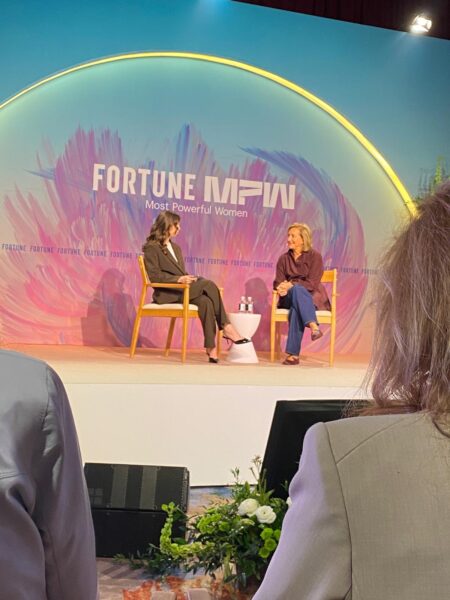
Many customers felt they couldn’t wear their denim, and thus they created “curvy denim” to reach a broader customer base. Horowitz says that “it is more important that the brand stands for what you can relate to more so than being like the cool brand.” Horowitz continues to explain that Abercrombie is “aspiring to be a long-lasting lifestyle brand that someone can wear and enjoy for many, many years.” Though the brand has experienced ups and downs like any business, they are currently in its “growth stage.” They partnered with the NFL, creating merchandise for “men, women, kids, and pets as well.” The partnership was seamless because both brands shared similar customer bases and values. The brand stands out by staying with the customer through all their milestones, even after they grow out of the age group.
A Game Changing Partnership: Ski & Snowboard & J.Crew
A powerful sports collaboration between the U.S. Ski & Snowboard and J.Crew was another pivotal conversation discussed during the summit. Sophie Goldschmidt, President/CEO of J. Crew, and Libby Wadle, the CEO of U.S. Ski & Snowboard, sat down with Editorial Director at Fortune, Kristin Stoller. Wadle explains that J.Crew doesn’t follow trends, expressing that “our touchstone really is our history, heritage, and really quality and how much that is mattered throughout the year and when we pick people to partner with or brands to partner with, brands that have a similar authenticity about them [and] similar heritage and our really like minded in a lot of ways is really critical for us.” Though the brand isn’t sports centered they have a “heritage certainly slope side.” Through their “cashmere” and “après ski,” the brand carries elements of sports which they further brought to life with the partnership with U.S. Ski & Snowboard. Wadle continues to explain that their customer base shares a love of skiing, making the partnership organic. She explains that “sports [is where] we all come together.” The brand is “multigeneration,” making the partnership more appealing.

Goldschmidt explains that the partnership was so perfect that “even the designs [when looked at] for the first time..[they] literally had no feedback.” The collection will consist of elements from previous catalogs, integrating their heritage into the designs. The partnership allowed the U.S. Ski & Snowboard to “transition into the lifestyle space.” The brand is non-profit with the main focus on their athletes and sports, having conversations about “what can the athletes do for us? What can we do for the athletes? How can they be involved in the products? How can we gift them? What [do] they need when they are on the road? How can they really be a part of this process?” It was important for this partnership to really focus on the athlete’s story and understanding their process and needs, while continuing a long relationship.
The Future of AI
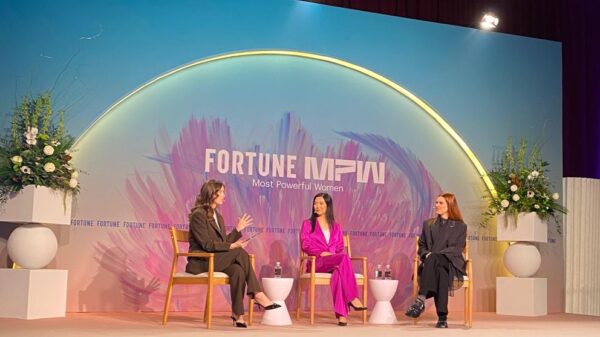
Amy Coleman, Chief People Officer of Microsoft, Karin Klein, Founding Partner of Bloomberg Beta, and Jessica Wu, Co-founder and CEO of Sola, sit down with Michal Lev-Ram to discuss how AI is changing the office. Klein explains that AI is still a learning process that is growing exponentially. Coleman explains that AI is “about experimentation and it is all about failing.” Wu adds that “AI is new and it’s going to hallucinate and work with experimentation in ways you previously wouldn’t have.” She continues to explain that “a lot of companies are seeing very real success.” AI has become a tool revolutionizing the world, and though there are skeptics, it comes down to trial and error and truly understanding what works with AI and what doesn’t.
AI Revolutionizing Fashion: Alta
In the topic of AI, a tool that has started to revolutionize the fashion industry is Alta, a platform that has transformed the way customers style their clothes. Founder Jenny Wang and investor/stylist to Michelle Obama, Meredith Koop, speak about the impact Alta has had on customer shopping and styling habits. Wang explains that the movie Clueless inspired Alta. Wang expresses that “every morning..[she] would feel so stressed, deciding what to wear..[She] tried spreadsheets..[She] tried Apple Notes and.. would always forget what..[she] owned and… would make a tornado in… [her] room every morning.” Wang explains that there are many aspects to building an app, and once ChatGPT was introduced, she saw the opportunity to create Alta. Wang continues to explain that AI is more personalized, while e-commerce websites are more generalized to a mass audience, providing similar results.
Alta helps with customer “purchase decisions” in the sense that customers can have a visualization of what their future purchase will look like with items they already own through an avatar. Alta has caught the eye of the younger generation, with the majority of users under 20, as Wang explains. Koop believes that Alta “is for everyone,” and it truly is. Alta is a platform that bridges fashion and technology, creating efficiency for many young people by helping them shop and put together various looks.
A Brand with a Mission: Rare Beauty
Founder of Rare Beauty, Selena Gomez, and Chief Impact Officer, Elyse Cohen, discuss the making of the beauty brand and how it became a billion-dollar business. Gomez and Cohen explain that their whole business was built based on community feedback. It was important for Gomez to create a brand that offers inclusivity through a variety of shades to accessibility within their products. Gomez explains that she “wanted to create the brand with a mission…[She] felt like at the time when..[she] was starting the brand with..[her] team, it just seeme[d] to be a lot of expectations for women” and it almost became a “fad or a style and it felt unrealistic to..[her].” Her main goal is to make “someone feel good.”
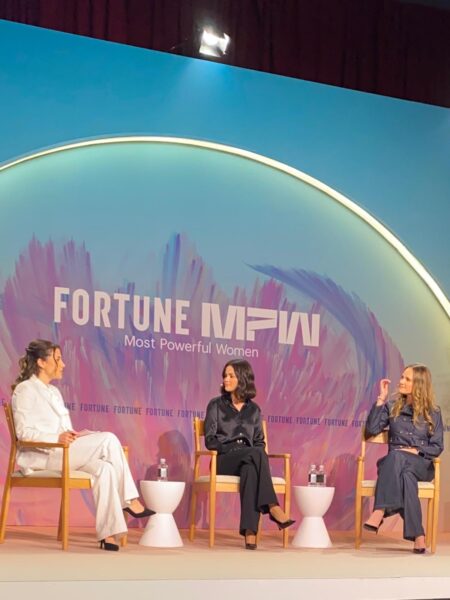
Unlike other beauty brands, Rare Beauty breaks down beauty standards, truly emphasizing one’s uniqueness rather than comparison. Gomez explains that the brand doesn’t even use real models, which makes it relatable. Rare Beauty has created a Substack community with over 12 million people, bringing them behind the scenes to see how the products are made. The brand was launched in 2020, during COVID, which allowed them to realize the real power of community through “Rare Chats.”
Creating an Impact: Rare Impact Fund
For Gomez, mental health has been at the forefront and was critical for her to integrate it into Rare Beauty. 1% of all sales from Rare Beauty goes to the Rare Impact Fund, which helps expand access to mental health resources and provides educational tools for young people. Cohen explains that, though it was a “risky” move, Gomez was willing to take the leap, staying true to her values. Cohen continues to explain that through fundraising, the brand “mobilizes 100 million dollars. This wouldn’t just be a corporate philanthropy; this would be a true foundation through and through.” Gomez explains that her “dream would be that they would teach some sort of education in schools” on the importance of one’s mental health. She hopes to keep the conversation alive and hopes her dream will one day become a reality. Gomez expresses that consumers “are a lot smarter than we think.” This is especially true when it comes to running a customer-centric business, as customers know what they want. Cohen explains that the brand aims to remain accessible, even through pricing, ensuring that tariffs don’t raise the cost of its products.
Breaking into the Beauty Business
Gomez gets candid about her documentary, My Mind and Me, and hopes that “people don’t look at that film and still believe..[she] is there.” Gomez was hesitant to release the film, but once she did, it had a bigger impact, pushing towards transparent, raw conversations. Her openness in the film allowed her to “gain trust with..[her] community.” Gomez feels that “most people wouldn’t have taken..[her] seriously” in the business and beauty industry, as many had “pre-conceived ideas of what..[she] is good at and that..[she] should stay in her lane and..[she] should do what.. [she is] here to do.” Although she expresses that “what I am here to do is make a difference,” a true and powerful statement, which she has demonstrated through her success with Rare Beauty and Rare Impact, proving everyone wrong.
Future Goals
Cohen explains that she hopes the brand would be able to “continue to work in partnership with..[their] partners to meet them where they are.” She continues to explain that “funding [is] being pulled from nonprofit organizations” and wants the brand to support organizations with the funding they need. The brand “brought in experts to help them in marketing and communications, strategy development, fundraising, so that..[the brand] was not just funders that hand over checks, but… truly work in partnership.” Gomez hopes “to make [an] impact first and foremost” and hopes the brand will “grow with what… [they are] doing.” Gomez has created a beauty brand that started with a mission and a community and has now revolutionized the beauty industry, removing beauty expectations entirely.
The Impact
Fortune MPW has empowered women entrepreneurs to have meaningful, raw conversations, learn from one another, and grow their businesses. The 2025 Fortune Most Powerful Women summit brought conversations on Leading in a Dynamic World. From Dina Powell McCormick’s conversations about mentorship to Fran Horowitz’s reinvention of Abercrombie, or Selena Gomez’s mission-driven approach to starting her beauty brand. Each conversation sheds light on how leadership revolves around a purpose that shapes not only businesses but the future as a whole.
Follow Style Cartel on TikTok and Instagram! And read more about Lifestyle & Culture here!
