

As a fashion student that has recently moved to London, I can’t even describe my excitement of living in a big city. And not just any big city, one of the big cities – a cool city that the main character of a movie would relocate to. A year ago, I was living in my small, quiet Canadian town. London is everything that a small town isn’t, with a thriving nightlife, plenty of restaurants and different cuisines, and a diverse and vibrant cultural scene. London’s history is filled with prominent people and influential movements in art, music, and fashion. And not only that, but London has done a phenomenal job of preserving this cultural history.
A pillar of cultural recognition is the Barbican. Opened in 1982, the Barbican is famed for its brutalist architecture and is a performing arts center in the heart of central London. From exhibitions to theatres to bars to concert halls, the Barbican has it all. Recently, I had the pleasure of visiting the Barbican’s Dirty Looks exhibition and it exceeded all my expectations. This is what I moved to London for.
Dirty Looks
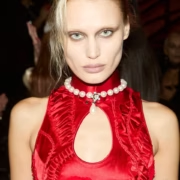
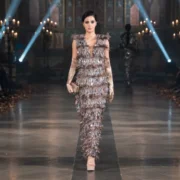
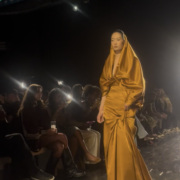
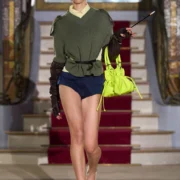
“Rebel against conventional beauty and take a look at the dirty side of fashion.” This exhibition explores unconventional fashion and how dirtiness defies beauty standards. It highlights the influence of designers such as Alexander McQueen, Vivienne Westwood, and Maison Margiela. As well, the exhibition showcases how dirtiness is reemerging in the fashion of today, and how this can impact the fashion sustainability of tomorrow.
Every display was incredible – thoughtfully curated and relevant to the exhibition. However, I’ve managed to narrow down my favourites to share with you all.
Leaky Bodies
This exhibit focuses on the taboo of bodily fluids in fashion, and how this is a form of dirt that comes from our own bodies. It highlights that dirty bodies often suggest autonomy and agency, rather than the passivity and purity that clean bodies signify. In fashion, this can be seen through ‘wet looks’, which we’ve seen a rise of on red carpets. Think of the Mugler dress that Kim Kardashian wore at the 2019 Met Gala – crystals falling from the dress like drops of water and the illusion of her dripping wet hair.
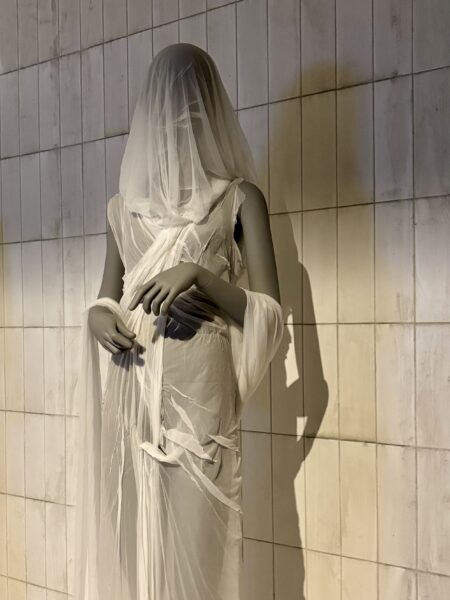
‘Artisanal Co-Ed’ Collection Autumn/Winter 2020
We can also see the ‘leaky body’ effect from recent catwalks that showcase clothes with artificial stains. These stains perpetuate the idea that certain bodily fluids like blood or sweat are shameful. However, this shame is challenged by designers deliberately incorporating these stains and using fashion as a medium for their art. This exhibit brilliantly leans into our discomfort and pushes the boundaries of disgust and fashion.
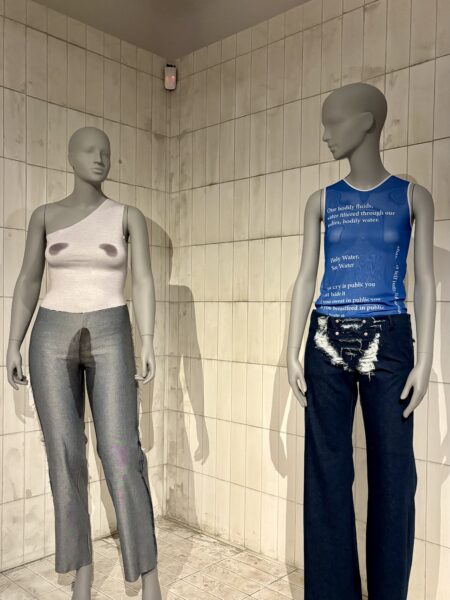
Spring/Summer 2025
Glittering Debris
In a world of fast fashion and mass production, this exhibit highlights the work of designers that “turn trash into treasure”. These pieces are critiques on how fashion is becoming increasingly short lived. Trends are a fundamental in fashion and generally, the trend cycle followed the “20-year rule”. However, fast fashion and social media have expedited this process, where we now see the rise of micro-trends which can last for as little as a season. This display shows the inherent sustainability of turning discarded materials into high fashion. These pieces imply the need for the industry to slow down and practice deliberateness. The work of these designers challenge typical notions of waste and emphasize that all material – even garbage – can be beautiful.

Stains as Ornament
Similar to the Leaky Bodies exhibit, the Stains as Ornament display looks at how clothing stains are often shameful due to an inability to maintain a certain standard of cleanliness. The designers in this exhibit delve into this societal rule and instead make stains an intentional aspect of their pieces. From lipstick to wine to pizza stains, these marks “reveal the beauty of the accidental and highlight the paradox in our willingness to accept them, provided they have been intentionally designed.” A contrasting thought surrounding stains is that they often show a life well-lived. These pieces examine how dirtiness is interpreted and the unspoken rules of who is allowed to look dirty.
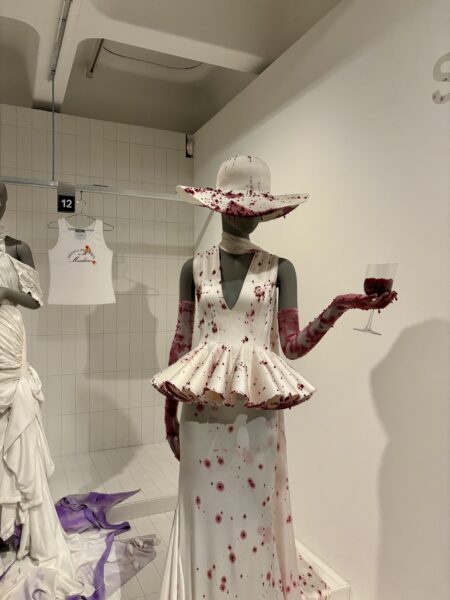
Fear Haute Couture Spring/Summer 2023
This article only highlights a few of the amazing displays at the Barbican’s Dirty Looks exhibition. This fashion exhibition is being shown until Sunday, January 25, 2026. There are varying prices for their tickets, including a Pay What You Can option. 16–25-year-olds can sign up for the Young Barbican program and pay £6. If you’re interested in unconventional fashion or want to learn more about how dirt and decay have a place in the fashion world, I highly recommend Dirty Looks.
Until next time! Follow us on Instagram: @StyleCartel and @StyleCartelMedia on TikTok, too, and leave a comment below!