
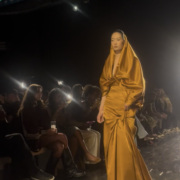
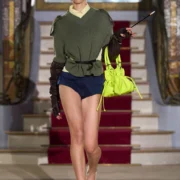
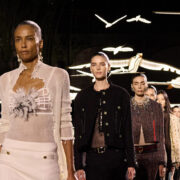

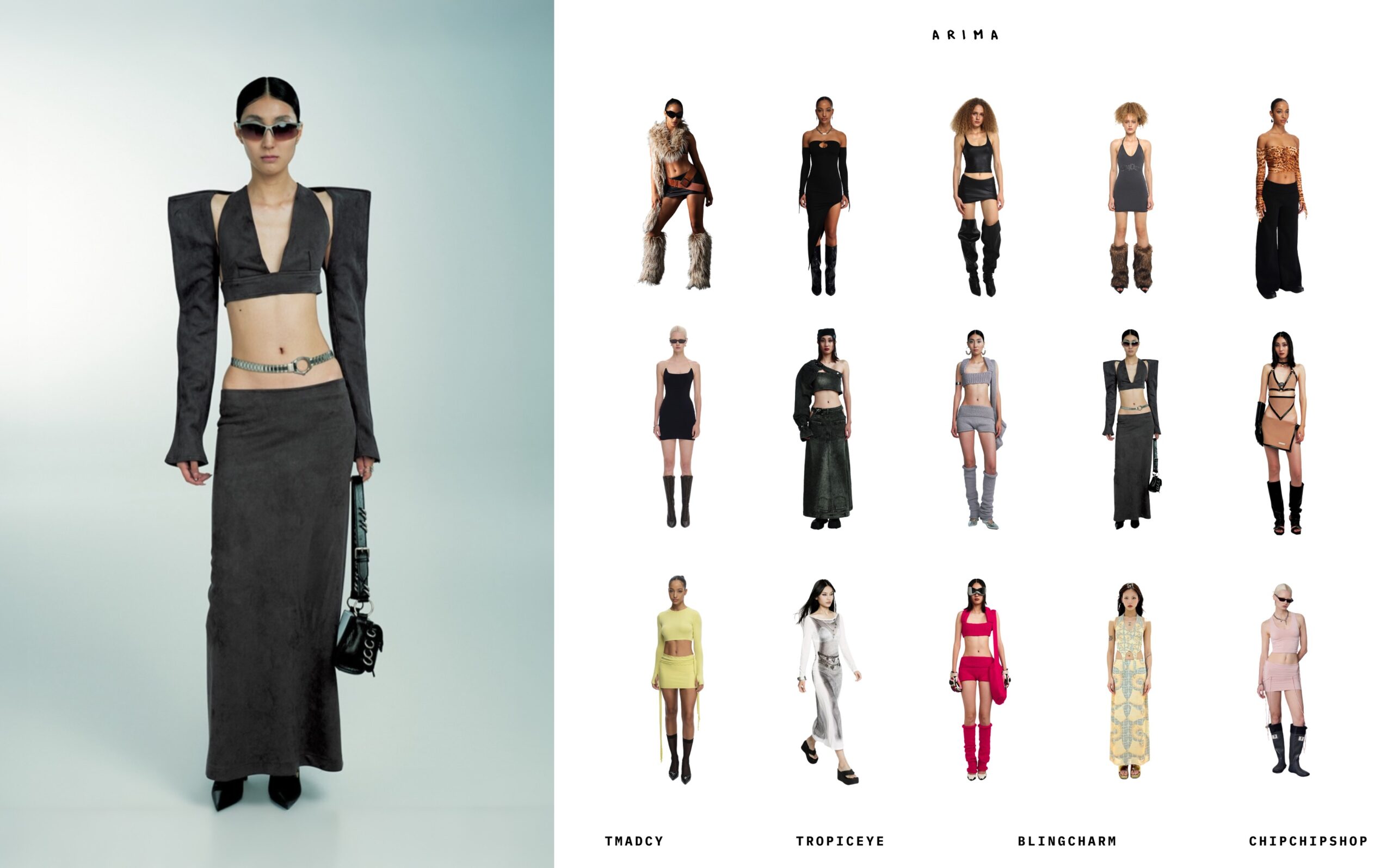
Innovative artistry is an undeniable core of the fashion industry, often emerging from unprecedented places. To Naomi Duan and Qi Sun, current co-founders of the online shopping platform ARIMA, it’s also a core part of their mission: reshaping the fashion landscape by highlighting unique styles and a fresh wave of emerging talent. Of these emerging talents is Cheang Yeang, the creative force behind the provocative feminine brand TMADCY.
Welcome to ARIMA Shop
“We want to create a space where fashion enthusiasts from all backgrounds can discover unique high-quality designs that blend traditional Asian influences with Western fashion. […] Right now we’re in a really good renaissance period for fashion design.”
ARIMA’s creation did not start with the conventional route of going to fashion school before launching one’s own business. An academic background in psychology and design, as well as experience being a digital product designer and techno DJ in the heart of New York City, exposed Naomi to emerging trends in music and culture. But her passion for fashion stemmed from a more internalized part of her identity, dating back to high school where she’d explore her own style. She calls it a “keen sense” that allows her to “combine trendy elements in innovative ways.” As for Qi, an architectural and deep interest in several design fields gave her a complementary perspective to the world of fashion, fueling her study of its history and cultural impacts.
Ivy Cao, the third co-founder, is currently focusing on personal academic matters, but it is this diverse mix of experiences and fashion expertise that makes ARIMA stand out.
BIRTH OF A VISION

The desire for fashion accessibility was the start of the online shop’s creation. The founders were completing their master’s program at a Pittsburgh institution, and in the city’s streets curious onlookers would sometimes stop Naomi to ask about her outfits. The problem came when she would have to explain that her clothes were sourced from local brands in her hometown, or when she’d try to send links that simply didn’t work within the U.S. So when she met Qi after their mutual admiration for each other’s style and fashion tastes quickly evolved into a friendship, Naomi shared her idea—launching a platform to connect unique fashion-forward consumers with emerging Asian talents and innovative designers. Qi was all for it, seeing that she’d always wanted to do something like this.
Their late nights after classes quickly became dedicated to their business. Branding and naming were their first set of challenges, which became settled after they decided on ARIMA. It stems from the popular statistical method used for time series forecasting and predicting trends and patterns. This came about because it turns out they have backgrounds in the study of statistics, most prominently for the third co-founder Ivy.
“We were like, ‘Oh my gosh, we’re a buyer’s shop so why don’t we be the trend predictor of the fashion scene as well? Or aim to be?’ That’s why we aspire to become one of the trendsetters in the industry. […] It also reflects our vision to be at the forefront of innovation, bridging emerging artists and fashion creation within local markets.”
After months of curation, Naomi’s move to New York City finally served up the opportunity to make the city’s fashion scene the place for ARIMA’s official launch. Introducing the online shop with a clean “succinct” aesthetic that some might call safe, but is in-fact a commendable marketing strategy. With a brand identity just visible enough, ARIMA allows for any emerging designer’s visions and creations to stand out boldly amongst its platform, giving shoppers an enjoyable user experience. The vision is clear: bring something new to the industry by infusing it with fresh, high-quality designs and elevate local brands to an international stage.
Of those local brands is one young designer with a bold message: “I want women to confidently say, ‘I’m a badass bitch,’ and express themselves boldly,” says Cheang Yeang.
Mad, Sexy, Cool Girls
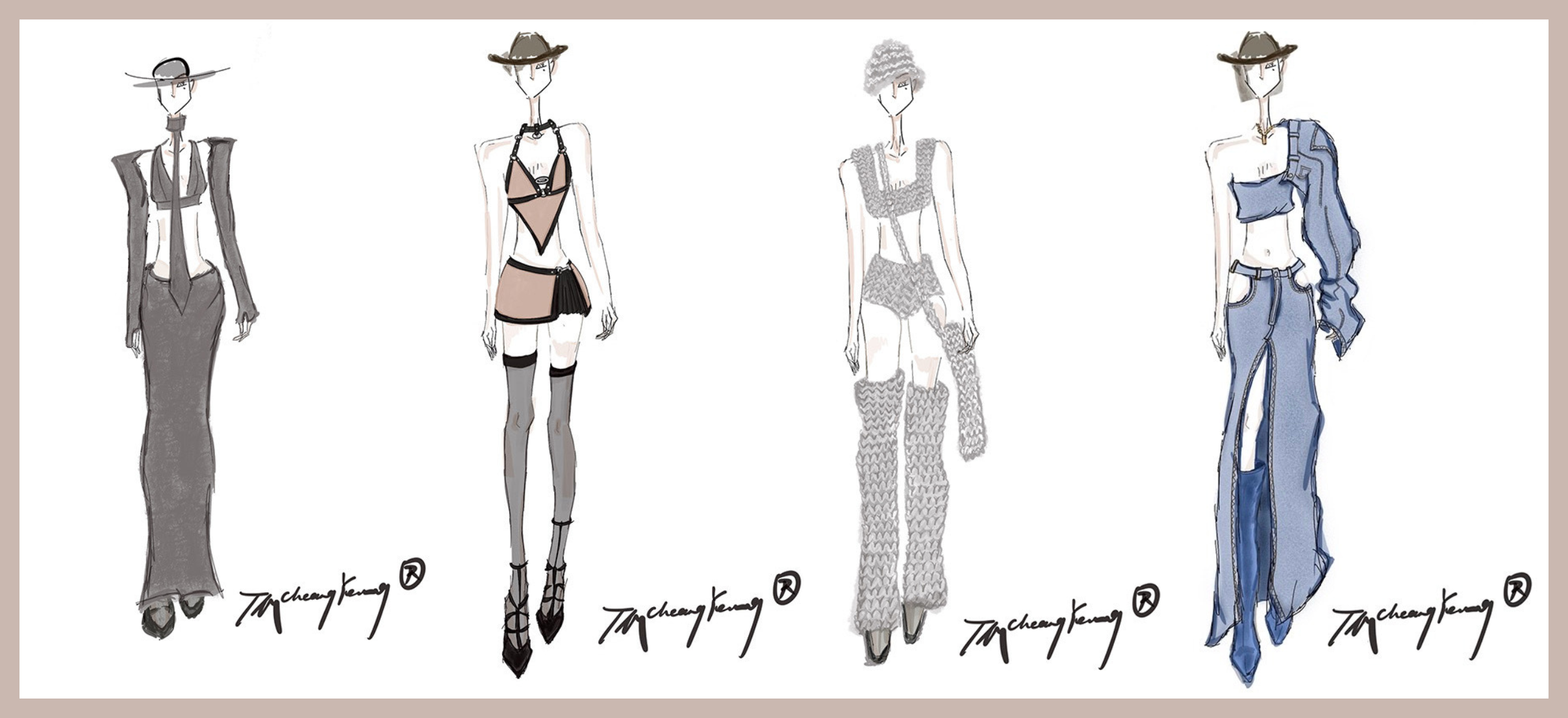
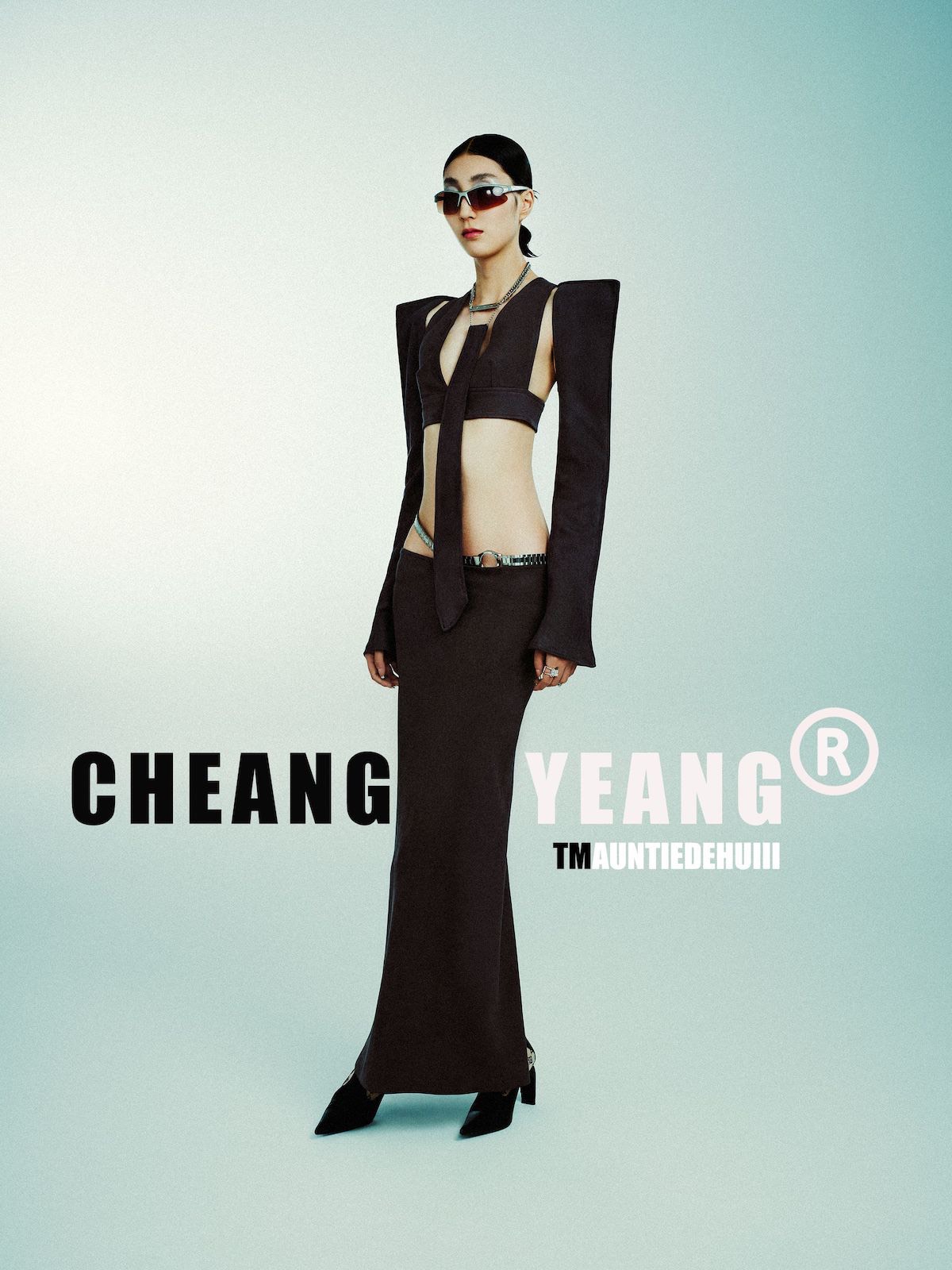
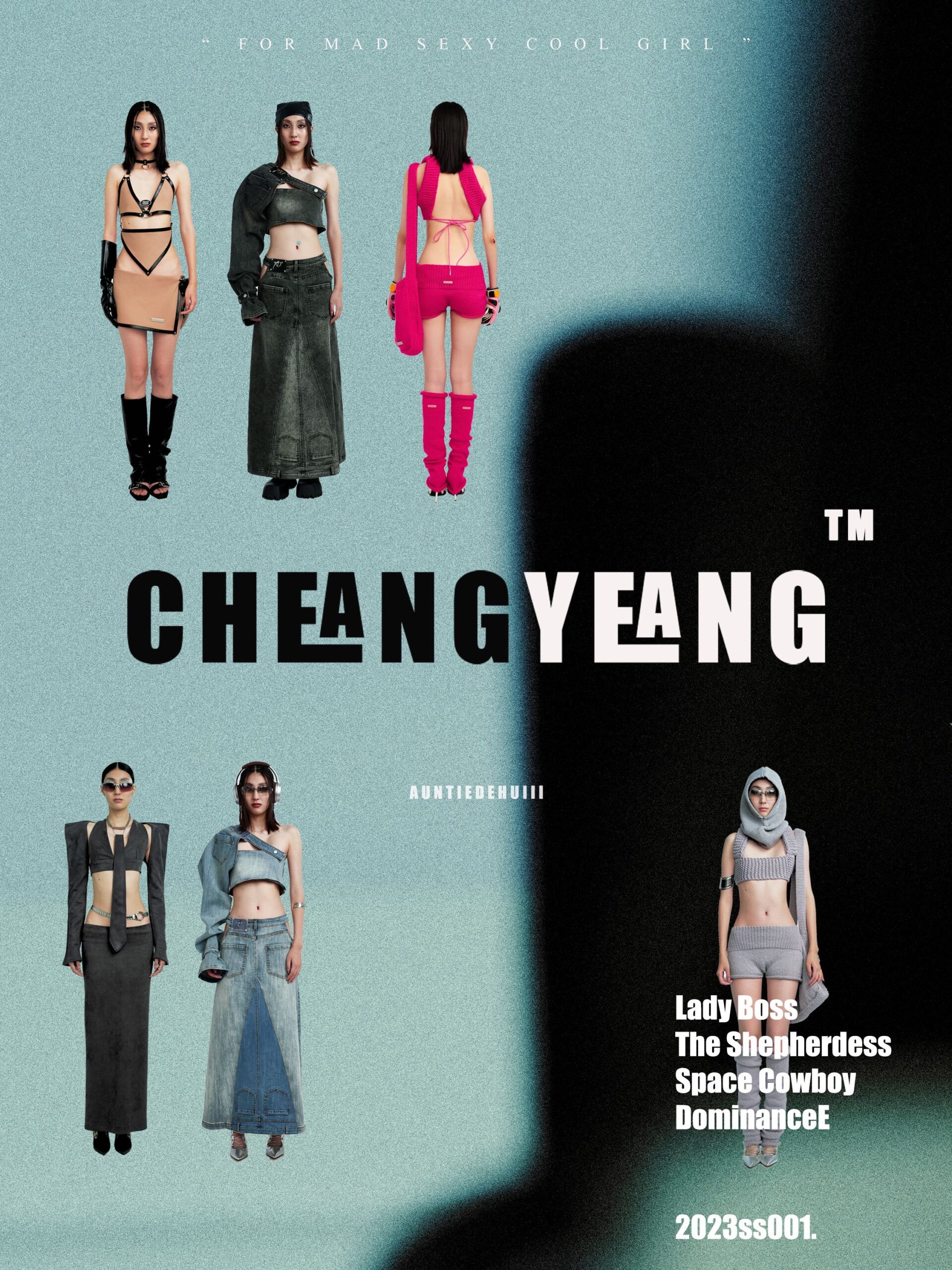
Cheang Yeang brings a provocative flavor to the fashion scene with unique cuts and silhouettes that offers a freeing power to the wearer’s feminine form. TMADCY—standing for “AD” as her mother’s initials, “CY” for her own initials, and a silent “TM” representing the trademark symbol—is a brand deeply rooted in intimately personal and socio-cultural references. Inspired by her mother’s self-taught skills in fashion, Yeang’s designs seek to challenge conventional notions of femininity and sexuality by pushing women towards proud declarations of traditionally shamed identities.
It seems like the young designer, who self-aligns with a flair for vanity, competitiveness, and love for freedom, was fated to pursue the realm of fashion. From a young age, she’d spend most of her money on clothes, always keeping a distinct memory of any clothing piece that caught her eye. Her first encounters with the art of making clothes began when she purchased two sewing books that her mother ended up reading for herself. “She’s truly a self-taught genius. I never had formal training in fashion school; my mom was my first pattern-making teacher,” Yeang tells us. “So, in many ways, this brand belongs to both of us.”
INTERVIEW WITH THE DESIGNER
Cheang Yeang offers us a beautiful narrative of her journey within fashion.
What is your brand called? How would you describe it?
TMADCY is a brand created for what society might label as “sluts.” In Chinese cinema, women often fall into a few categories—the pure maiden, the mother, and the slut. These roles are typically very distinct and one-dimensional. […] While some might only see surface-level sensuality, I believe a woman’s beauty shouldn’t be subtle or restrained—it should be bold and passionate.
What inspired you to pursue fashion design?
From a young age, I’ve always spent most of my money on clothes—I just knew it was something I loved. Back in high school, I realized my happiest moments were when I was planning what to wear the next day and dressing up. In college, I even helped friends working in fashion by finding brands for certain celebrity outfits. My bag was full of cosmetics instead of textbooks, and I’d spend over an hour before bed playing dress-up in front of the mirror. We had to wear uniforms at school, but I’d secretly wear my carefully chosen outfits underneath and change once I got to school. I even swore I’d never wear high heels or pink—funny how that turned out!
Fashion design became a way for me to save myself and affirm my self-worth. I initially wanted to major in fashion design, but I ended up studying film directing instead because people often say turning your passion into a job can take the joy out of it. However, my experience in the film industry left me frustrated. […] The only thing that cleared my mind was sitting at a sewing machine. That’s when I realized design wasn’t just something I chose—it also chose me.
What does your creative process look like from start to finish? How do you gain your ideas or inspirations for the clothes you make?
(S)ince there’s always a gap between 2D and 3D designs, this process can sometimes feel a bit rigid. I often find myself tweaking designs during the pattern-making phase. It’s like characters in a story—they evolve as the plot unfolds. Lately, I’ve been starting with a general design concept and then looking for fabrics. By wrapping fabric around my body, ideas for patterns and designs naturally come to mind, allowing me more creative freedom. The material really plays a huge role, as it largely determines the style of the design.
Inspiration is a tricky thing—it’s like waiting for rain. Sometimes ideas just come out of nowhere, even when I’m not actively thinking about them.
Since I studied film, a lot of my ideas are visually inspired. I might see a particular scene and imagine what kind of clothing would fit that setting and make the wearer stand out. I love designing pieces that capture attention. Speaking from a more specific creative experience, in one of my drafts, I designed a dress with a cross on the chest. The inspiration came from a Netflix series I watched called “Copycat Killer.” There’s a story in the series about a Christian girl who gets kidnapped. Her grandfather, who’s a Buddhist monk, pleads with the kidnapper to let her go. The story goes that the girl had left home and ended up in a dangerous situation because she didn’t dare tell her grandfather, who’s a traditional Buddhist and the head of a small temple, that she had converted to Christianity.
Unfortunately, she’s caught by the murderer and goes missing. Every day after her disappearance, her grandfather prays to Buddha, hoping for her safe return. In the end, the girl is brutally murdered and her body is discarded on a cross. Watching this, I felt a deep sense of irony—that in the end, neither her God nor her grandfather’s Buddha could protect her. I translated this clash of religious beliefs into my design: the cross on the chest represents Christianity, while the beads hanging on the back symbolize Buddhism.
Where do you see yourself and your brand in the future of fashion?
The main markets for my brand currently are China and Asia, where freedom of dress is still not a common phenomenon. […] My vision is to break down social stereotypes about female sexuality, eliminate”slut-shaming,” and turn sexuality into a source of pride and power. Through design, I aim to express a woman’s inner thoughts and emotions, making each piece of clothing a form of self-expression. The brand is all about giving women more choices and the confidence to embrace their unique personalities.
Fashion is complex and always evolving. It’s the constant change that makes fashion exciting, offering endless opportunities for vanity and exploration. I don’t want to blindly follow every new trend. Instead, I hope my brand can introduce new ways of thinking about fashion. As TMADCY grows, I want to use clothing to present a vision of the future—much like in Spike Jonze’s film “Her,” where technology is advanced yet unobtrusive, and people pursue love and freedom boldly. The future is about humanity, and I believe we should embrace it fully.
What other brands inspire you the most and why?
Internationally, I’m inspired by Jean Paul Gaultier and Alexander McQueen—they’re at the top of their game. When I first saw Gaultier’s work, I was blown away. […] The ideas I thought were original had already been executed by him decades ago. He’s naturally become my favorite designer, and I’d love to meet him in the future.
Both Gaultier and McQueen create powerful female images that resonate with me. Gaultier’s designs often depict women as bold and alluring, embracing the “bad girl” vibe that’s always captivating. McQueen, on the other hand, is a universally loved genius. I’ve watched all his shows, and his fashion artistry is unparalleled. Whether it’s the design of the clothes themselves or the way his shows are presented, he’s exceptional. His work is like a textbook for bold, innovative fashion—you can’t ignore him if you want to be in this industry.
In China, I admire Robert Wun and Suen Sun for their blend of […] Western patterns with Eastern concepts, creating a mix of retro and futuristic elements. I think this trend of merging historical and avant-garde styles reflects a vision of the near future. It’s a softer take compared to the dystopian cyberpunk aesthetic.
Who is the person or the audience you design for?
My designs are for “mad sexy cool girls.” The concept behind TMADCY is that resisting sexuality is like burning a harp in a dull kingdom. TMADCY designs clothes for “sluts” who don’t shy away from expressing desires—whether it’s for sex, money, power, or freedom. In this consumer-driven world, my brand offers “what you like, what you suit, and what you need.” These women are like different versions of myself scattered around the world. We’re all caught up in consumerism, but I have to admit, vanity is a driving force in fashion.
Is there an audience you’d prefer to not be represented by your brand?
Not at all, haha. Every customer is a customer. Objectively, fashion’s cultural impact is limited, but from a business standpoint, reaching beyond the target audience is necessary for growth.
What is a piece of advice you’d give to emerging designers/creatives like yourself?
Instead of advice, I’d offer some words of comfort: Be bold in your creations and bring your ideas to life. Without action, your aesthetic will just be overshadowed by admiration. You’ll likely face failure and lack of recognition at first—these things are almost certain in the beginning.
But even if that happens, we still want to design, don’t we? By creating, something of yours will be left behind. Through all the hardships, may we find renewal. I wish every artist could experience a revival and see their brand recognized.
If you were given the chance to show at any major fashion week, which would you choose and what would be your collection/runway concept?
I don’t have a complete custom collection at the moment, but if I get the chance in the future, I’d present a series currently in the sketch stage, tentatively titled “Female Victims.”
I’m really into suspense films, and my favorite director is David Fincher. At one point, I even thought that might be my future career. I’m intrigued by the bloody, violent puzzles in films. But after watching so many suspense movies, I’ve noticed that female victims are always portrayed as beautiful, sexy, and vulnerable. This made me wonder—are we romanticizing suffering when we depict female victims in such a pitiful way?
Inspiration also comes from a book by Japanese author Chizuko Ueno called “misogyny.” One idea from the book made me think a lot: often, after women are harmed, their first act of revenge is against their own bodies, as it is usually the only thing they can fully control. This phenomenon makes me uncomfortable. So, I ask: when the camera focuses on female victims, are we beautifying their suffering?
I don’t have an answer yet, so I want to use this show to seek the […] answer.
If you could choose any other aesthetic/style to design your garments based off of, which would it be?
I’d go for an all-black aesthetic, similar to Yohji Yamamoto. My mom always told me to avoid buying black clothes when possible. The less black you have, the more you’re forced to mix and match.
But in reality, black is often the safest choice. This style is completely opposite to mine. A lot of my friends are obsessed with Yohji Yamamoto. I often joke that people who love Yamamoto must be a bit crazy because these friends all have similar traits—they think black is the coolest color, and they’re usually pretty pessimistic and negative. To me, “black” no longer represents the avant-garde in today’s world. For the past twenty years, black was rebellious, but now it feels like the safest option and a staple in most wardrobes. At the same time, I’m curious if I could create a design that contrasts my current style, minimizing the expression of desire, yet still achieving a vibrant and colorful black.
The Future of Fashion
Both ARIMA and TMADCY illustrate how personal experiences and interdisciplinary approaches can transform the fashion industry. Naomi and Qi’s platform and Yeang’s provocative designs are reminders that fashion is not just about trends but about meaningful connections and expressions.
As they navigate the challenges of building their brands—be it logistical hurdles or the quest for customer engagement—these visionary entrepreneurs continue to push the boundaries of what fashion can be. Their stories are a testament to the power of diverse perspectives and the relentless pursuit of creative passion in shaping the future of fashion.
With their innovative approaches and unwavering dedication, Naomi, Qi, and Cheang Yeang are not just participating in the fashion industry; they are redefining it, one design at a time.
Find the world of TMADCY at @arima.shopp on Instagram. Explore ARIMA at arimashop.co.
Follow us on @stylecartel on Instagram for everything in Fashion & Culture. Check out the best collaborations to add to your rotation this week, & follow and sign up for our newsletter for early access to the best drops sent to your inbox. Check out our other articles on StyleCartel for more Fashion content!
All images courtesy of TMADCY and ARIMA.
