


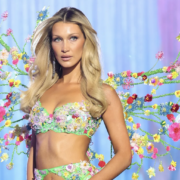



Everyone has a fantasy on fashion week before they’ve ever been to one. It’s front row and flashbulbs, it’s Anna Wintour sunglasses indoors, it’s an editor sweeping past you in something couture while a soundtrack plays that only exists in your head. That’s the version sold to you in every recap video, every “get ready with me” reel, every glossy little montage set to a song you’ll have stuck in your head for a week.
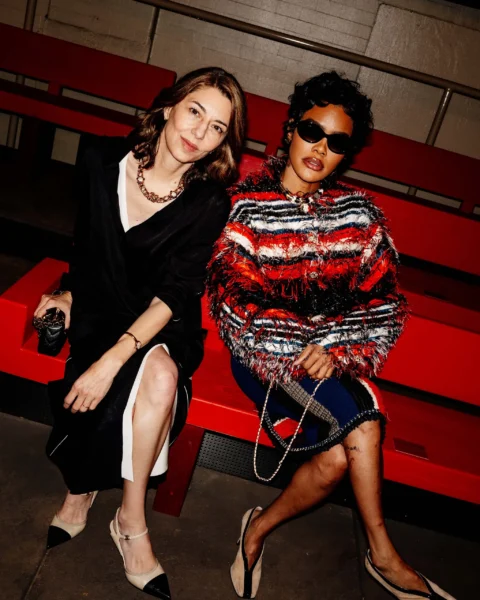
Then you actually do it. And you realise the glamour is real, technically, but it’s about ten percent of the experience, thinly spread over four days of chaos, cold pavements, and a phone battery that dies faster than your will to live. Nobody warns you about the other ninety percent. So consider this the debrief nobody gave me before my first season, written so you don’t have to learn it the hard way, on a bus, at 8am, mascara down your face, wondering why nobody mentioned any of this.
You will live on public transport
Forget the fantasy of being whisked between shows in a blacked-out car with someone’s assistant handing you a chilled water. That’s happening, somewhere, to someone. It is not happening to you, not on your first season, and possibly not ever, unless your surname is doing some very heavy lifting.
The truth is more TfL than Chanel. You will learn the fastest walking route between two venues that Google Maps insists is fifteen minutes but is actually eight if you don’t mind arriving looking like you’ve run a small marathon. You will become fluent in editing content on a moving bus, thumbs flying, one AirPod in, praying the wifi holds long enough to post before the next show starts. For journalists and content creators especially, the ones actually documenting this thing in real time and not just attending it, the commute isn’t the gap between the job. The commute is the job, disguised as dead time.
The schedule is a suggestion, not a promise
Every running order you’re sent will lie to you, gently but consistently. Shows starting “on time” is a myth passed down like folklore, something people mention with a wistful little laugh. In reality, a 2pm show might start at 2:40, which means the 2:30 you had lined up next door is now a scheduling car crash, and you’re standing outside two venues at once trying to work out which gamble pays off. You learn to build in buffer time you don’t actually have. You learn to make peace with missing things. You learn that the person who looks calm and unbothered in the queue next to you is very possibly doing the same mental spreadsheet you are, just with better concealer.

The follow-up email is your best friend
Here’s the one that catches people out: attendance at fashion week is rarely confirmed when you think it will be. You’ll pitch for a show weeks in advance, hear nothing, assume it’s a no, and mentally move on. Then, at 2am the night before, or sometimes the morning of, an email lands confirming your place like it’s the most normal timing in the world. Which, in this industry, it is. The people who get in consistently aren’t necessarily the most connected. They’re the ones who follow up. Politely, persistently, and without ego. Send the email again. Then send it again. The worst outcome is silence, and you’re used to that already.
Dressing up can get you into doors
Nobody tells you this bit because it sounds shallow, but it’s simply true: how you look can get you in. Not always. Not for everything. But there is a real, largely unspoken economy at play outside every venue, where a good outfit, the kind that gets you shot by the photographers lining the entrance, the kind that makes a PR do a double take, can be the difference between standing at the back and being quietly walked to a seat that wasn’t yours ten minutes ago. Dress like you belong and, occasionally, you just start belonging. It’s not fair. It’s also fashion week, so fairness was never really on the table.
You will forget to eat, and then resent everyone who didn’t
There is no lunch. There is, if you’re lucky, half a pastry eaten standing up outside a venue while replying to three emails and trying not to get foundation on the packaging. Food during fashion week becomes theoretical, a thing you plan for, mention out loud, and then abandon the second the next show alert pings. By day three you will feel a genuine, unreasonable flash of resentment towards anyone casually holding a proper meal, as if they’ve personally betrayed the unspoken rules of survival. Buy the snacks. Keep them in the bag with the power banks. Future you will be grateful, in the brief window future you remembers to eat them.
Someone will be crying on the phone to their mum, and it might be you
Nobody puts this in the highlight reel, but fashion week is emotionally lawless. You are running on no sleep, too much caffeine, and the constant low hum of comparing yourself to everyone around you, and at some point the dam breaks. It’s not rare to walk past someone tucked into a doorway, phone pressed to their ear, quietly falling apart to their mum about how tired and overwhelmed they are, while somehow still living out a version of their actual dream. Both things are true at once. That’s not a contradiction, that’s just what the week does to you. I definitely don’t speak from experience. Definitely.
Afterpartys are your time to network to the max
By the third day your body will be operating on a diet of dry shampoo, adrenaline, and whatever canapé someone handed you at 11pm that you never actually got to eat. Exhaustion will hollow you out in a way that feels almost structural, like tiredness has moved into your bones and set up a small flat there. And yet, the afterparty is not optional. It’s arguably the most important part of the day.
This is where the real conversations happen. Not the rushed, PR-chaperoned two minutes outside a show, but the actual ones, the kind where someone remembers your name three months later because you talked properly, human to human, glass in hand, guard down. Network here or don’t network at all. The shows get you in the room. The afterparties get you remembered.
Your bag becomes a small crime scene
If you’re working for a social-first publication, prepare for your “what’s in my bag” to stop looking like a fashion editor’s and start looking like a field engineer’s. Four power banks. A ring light. A microphone or two, tangled together in a way that defies physics. Phone mounts. Spare SD cards you will still somehow run out of. Security will unzip it, pause, and look at you with the specific concern usually reserved for people who might be building something. You are not building anything except content, but try explaining that in a two-second bag check queue.
Sometimes the street is the show
Here’s the bit that genuinely nobody tells you: you don’t always need to be inside. Every fashion week has its unofficial hubs, the cafés, the corners, the bits of pavement outside the big venues, where the entire industry seems to just gather. Content creators, influencers, editors, stylists, the odd person you can’t quite place but who is clearly someone. You will spend as much time working these spots as you do the shows themselves.
View this post on Instagram
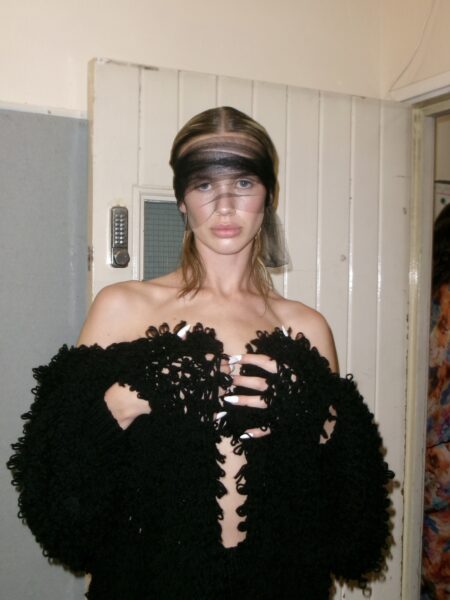
I didn’t get into one of the shows I most wanted to see. I stood outside instead, phone in hand, mildly sulking. And that’s how I ended up seeing Julia Fox, in her natural Julia Fox lore.
That’s the trade, really. You lose the seat. You gain the story. Most seasons, that’s a fair swap.
So, will you survive it?
Yes. Probably with worse feet and a strange new relationship with your Citymapper app, but yes. Fashion week is not the fantasy they sell you, and it’s not meant to be. It’s four days of logistics wearing a very good outfit. The car doesn’t come. The schedule lies. The bag looks suspicious. You eat standing up, if you eat at all, and at some point you will need to sit on a curb and text your mum something slightly dramatic.
But somewhere between the bus commute and the bag search and the show that started forty minutes late, you’ll end up on a pavement talking to someone you never expected to meet, and it’ll click: this was never really about getting inside. It was about being present for the bits that happen when you’re not. Go in tired. Go in under-slept. Just make sure you go in wearing something that gets you noticed. Importantly, check your inbox at 2am, just in case.
