




A brand that combines sustainability and men’s bespoke tailoring is Sivan. The brand was founded in 2020 by Jack Sivan, a Brooklyn-based designer who focuses on creating timeless pieces that are both functional and fun. Sivan breaks barriers by moving away from trends and creating one-of-a-kind pieces, playing with colors, fabrics, patterns, textures, and silhouettes. The garments embody the rich history and craftsmanship of tailoring and menswear, with a modern twist that can make the wearer feel confident and stylish.
The brand explains that it centers around sustainability, which is embedded throughout the business, from production and distribution to materials, fabrics, and reuse. Sivan stands out in its understanding that a garment won’t last a lifetime and eventually will be disposed of, and takes that into consideration when designing.
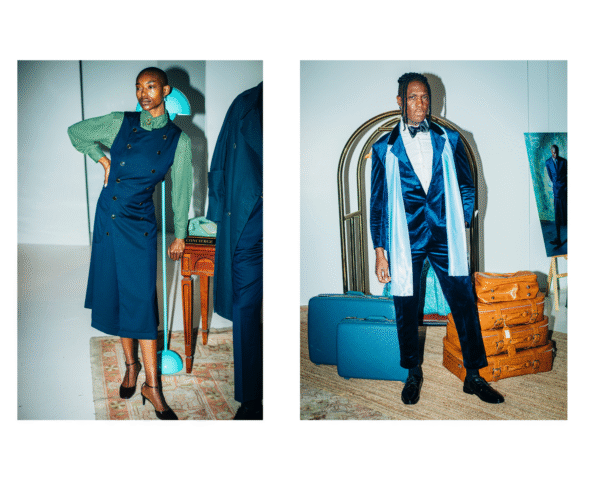
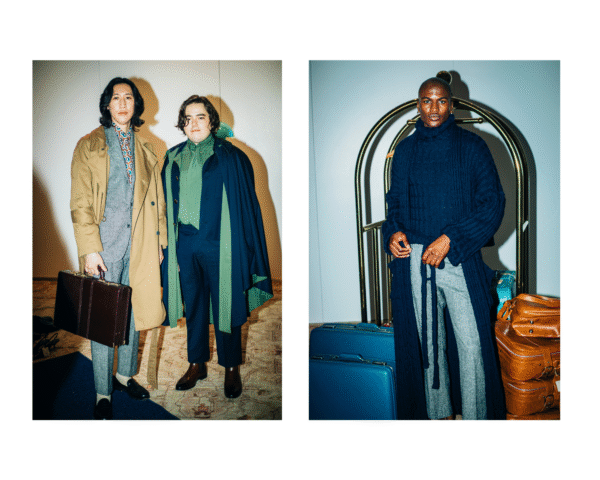
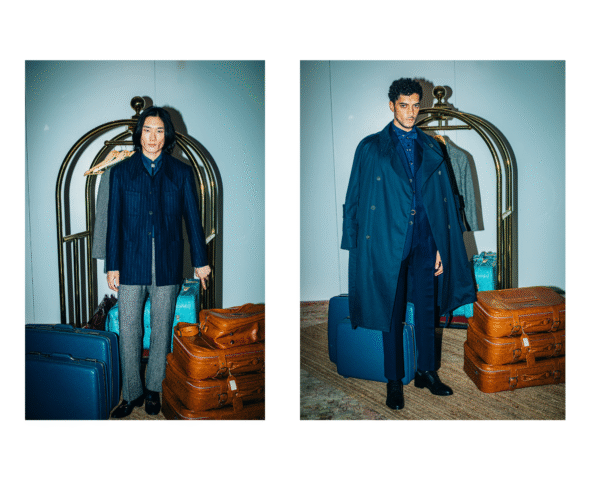
The brand continues to explain on their site that they intertwine accessibility through its model, inclusivity through its offering of various sizes, and its commitment to creating affordable garments. Sivan dedicates its mission to helping customers feel their best selves while wearing their garments, which is evident in their FW25 “The Hotel Sivan” collection. I was able to ask a few questions regarding the collection from the designer, Jack Sivan himself:
Style Cartel: What inspired “The Hotel Sivan” collection?
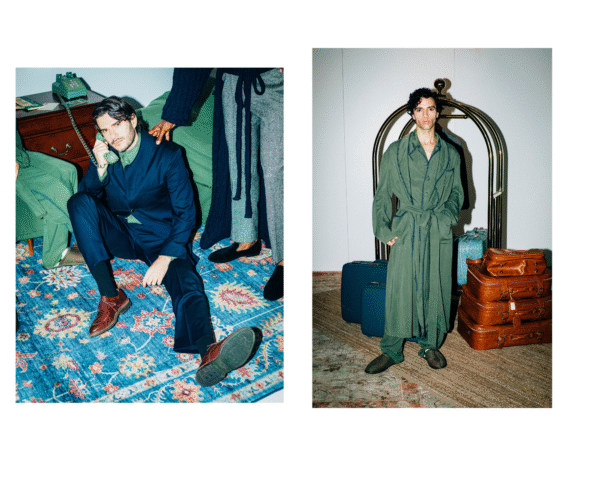
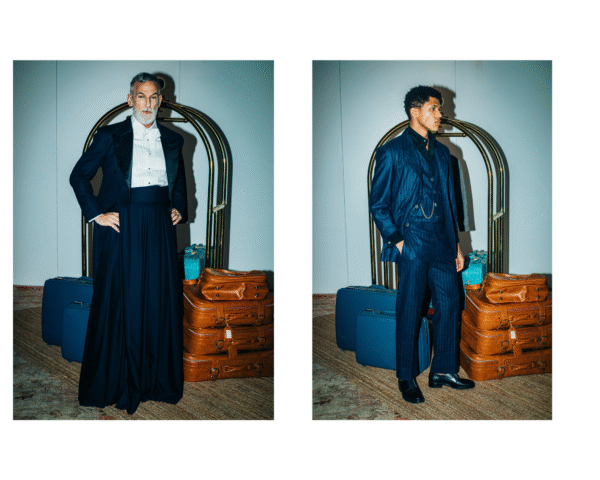
Jack Sivan: “My process in general starts with the clothes, and the collection’s theme follows as the best vehicle to contextualize them. As I was working on FW25, I was trying to focus on character and find a scene where these looks could all exist in the same space. I wanted to spread out the level of formality from functionality with workwear on one end and gala / formalwear at the other, but the line kept looking like two distinct collections. As I worked, the characters inhabiting each look started to come together, and I realized the only type of space where you could get the range of formality under one roof in one night would [be] at a hotel. From there on, I let the setting take the reins. I spent a while going over various historical hotels, trying to keep my scene feeling like both a throwback and out of time, eventually focusing on some mid-century New York hotels for inspiration. This then led to editing the collection, mostly dropping a lot of the workwear in favor of the uniform looks of the hotel’s staff, which is really my favorite part of this collection. Having an institutional setting lends a lot of direction to [the] color palette, and allows me to easily differentiate between the characters’ group affiliations. This also gave the formal looks a reason to be there, and added a reason to introduce a third vignette to the collection: a motley crew of guest[s], which could all be different but due to the setting could all still have a reason to be there. Previous collections had very little emphasis on the theme, they were either afterthoughts or just an explanation for the color palette, but this was the first collection I had done where I felt I found my footing in the reason for doing a show, the scene.”
Style Cartel: How did the color choices tie into the overall mood of the collection?
Jack Sivan: “I love blue. In terms of color palette, blue was my base layer and starting point for this collection. Since I was building the collection around the hotel setting, I needed to pick the hotel colors, both for the set and for my uniformed staff, so I went looking for a smart color which I could pair over and over again with a rich midnight blue wool suiting that I’d started using in everything. I wanted a color with some pop that, when color-blocked, would read as a uniform pairing, but not be unwearable out of context (I want to make garments that can exist without the context of the collection). I had a poppy colored poplin and some vintage caramel ultra-suede that I’d started working on for some of the guests, but they were a little too jarring to be a modest uniform pairing. Simultaneously, I stumbled upon a cache of vintage olive tencel, and started coming across green in a bunch of different uniform references (which I had intentionally tried to steer clear of to avoid any military associations), but the tencel was so drape-y – the second I saw it, I saw the shirting and the lining and went with it. The rest of the collection [was] built around that core.”
Style Cartel: What drove your fabric selections?
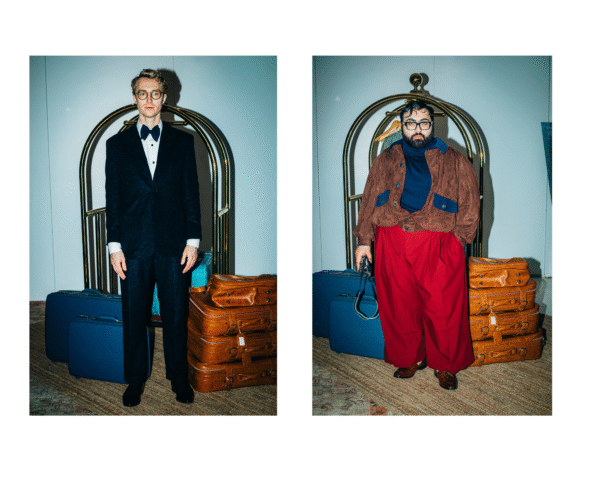
Jack Sivan: “Sustainability first, wholesale plans second. I work with natural fibers only, with the only exception being dead stock material. Most of the collection is built on top of RTW collection plans, which I’ve been getting out into stores, so in order to keep creative consistency, reduce waste, and to save some budget, I chose to build the runway collection on top of those same materials. The grey tweeds, midnight blues, chalk stripe flannels, and navy meltons, were all selected for production and make up the base layer of the fashion week collection, the other materials got added to compliment and elevate the collection beyond what might be directly appealing to stores, but might be very appealing to be bespoke clients who are much more interested in some flair.”
Style Cartel: Sustainability is at the forefront of your brand. How was sustainability integrated into “The Hotel Sivan” collection?
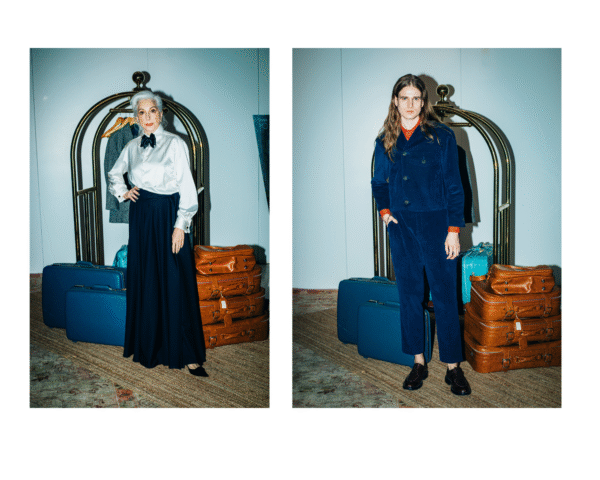
Jack Sivan: “I treat it as a cornerstone of good design. Just as important as the balance of form and function, or the basic requirement of ‘does this fit?’ Material quality and province is the deciding factor[s] in not just the fabrics, but buttons and other headwear, where I steer clear of all plastics. The only exceptions, as I’ve said before, are dead stock fabrics. However, sustainability requires more than just a focus on materials. It requires designing items that last, it means starting with what I have in stock now to avoid waste, and it means working with collaborators who have fair and safe work practices. It also means not compromising when it comes to all of these aspects as we grow.”
Style Cartel: What kind of customer did you envision when designing “The Hotel Sivan?”
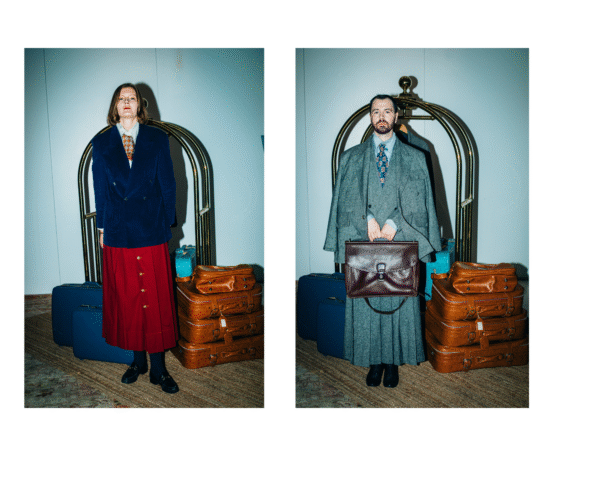
Jack Sivan: “Mainly the ones I already work with, which come in a lot of shapes, ages and sizes. I think of Sivan as a menswear brand in design principle, but not necessarily in terms of market category. My bespoke clients are not primarily men, but they are menswear shoppers, so it’s important to me that my collection and my cast fit the brand it will represent. Since I’m expanding into some retail partnerships, I hoped I could use this collection to display that range, that eclectic but discerning group of people who might be drawn into their shop in search of a great jacket.”
Style Cartel: In three words, how would you describe the emotion or message this collection conveys?
Jack Sivan: “Familiar, welcoming, dignified. These are also qualities I hope are conveyed by the Sivan brand as a whole. The Hotel Sivan collection was meant to create a space and a cast of character[s] that the audience could see themselves in. An achievable aspiration of a crowd they might look at and, at first thought, identify with one of its occupants. Often, collections try to instill a sense of cool through distance, or evoke a clientele who is aspirational to all, and as such, in reach of no one, as I’ve never been compelled by that. I wanted a reason for all these people to be in one place at the same time, and for the audience to immediately see why, and feel involved. Dignity is in many ways an unspoken cornerstone of traditional menswear, either in a protective form or in a hierarchical form. When looking to create a collection which spans obvious ranges of class (such as formalwear gala guest in the same room as uniformed staff or weary travelers) it is important for me not only to give the same respect and consideration to the design and tailoring of all looks, but also to make sure the staging, styling, and models themselves, felt as if there was no disparity in respect given to their role in the scene. No one is the center; all are flushed out and familiar.”
Follow Style Cartel on TikTok and Instagram! And read more about fashion here!
