

Welcome back fashion divas! I hope you are excited for today’s topic! Before we get started, please make sure to follow and engage with our Instagram and TikTok pages (both @StyleCartel). Now let’s get started…

The Rise of Anok Yai: 2025’s MOTY (Model of The Year)
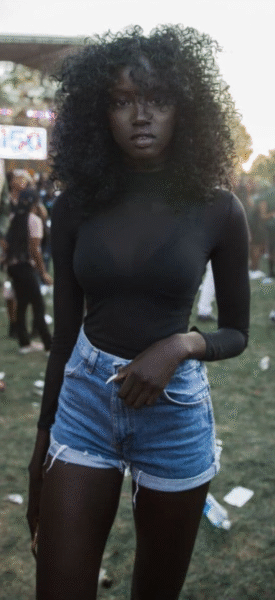
For this young model all it took was a Howard University’s Homecoming Yardfest where one lucky photographer, Steve Hall, caught an image of her candid. She wore a black bodysuit, high-waisted denim shorts, and minimal makeup. To many, there wasn’t anything glamorous about this girl, but her authenticity, effortlessness and most importantly, realness, shone through.
This caused her to go viral overnight. The model recalls in her changing room whilst getting ready to receive her MOTY (Model of the Year) award that ‘she always knew something would happen at 20’ and overnight she had gained ‘30,000+ followers’ according British Vogue TikTok. Within days of discovery, she was signed by Next Management — one of the most prominent modelling agencies in the world.
Some of her Achievements
Anok surpassed expectations and outlasted the ‘15 minutes’ people expected her to have. Being the first Black model in 2018 to open a Prada show since Naomi Campbell in 1997, she symbolised a more deeper and meaningful shift towards more inclusive fashion.
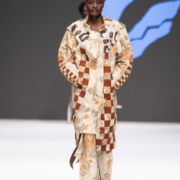
Since then she has become a mogul and supermodel on the runway, walking for nearly every major fashion house. Some include: Chanel, Valentino, Saint Laurent, Givenchy, Versace, Tom Ford, Balenciaga, Off-White and Miu Miu.
Her success has truly remodelled the cultural symbolism for black representation and visibility, especially as a dark-skinned Sudanese woman. Her reward as MOTY for the British Fashion Council has shown that triumph at an international level can truly be accessible to any Black individual regardless of systemised oppression, discrimination, racism and other forces created to limit Black communities.
The Combined MOTY Effect: How These Models Have Remodelled Fashion’s Values
With 2023, 2024 and 2025’s winners being Paloma Elsesser, Alex Consani and Anok Yai respectively — we see a movement in the fashion industry, an expansion in allure away from the ideology of ‘perfection’ created by western societal beauty standards to one of representation. They have collectively shifted a fabrication of exclusivity to one of authentic beauty unrooted in race, size, or gender.
Each career has pushed designers, editors and stylists to reimagine silhouettes, themes, castings and narratives. This isn’t a push of inconvenience but one of revitalisation.

Alex Consani and Paloma Elsesser
Being a young trans supermodel from Vallejo, California, Alex utilised social media to express herself long before recognition in the fashion world. Her distinct look and most notably, eccentric personality caused her to radiate character in ways models hadn’t before. With history displaying models as mute figures, and treatment like ornaments for clothing, she knew she had to defy odds and bring her own creative blend to fashion — a blend that has enabled her to build a humorous (whilst also high-fashion), Gen Z satirist brand and image.
Paloma, born Paloma Kai Shockley Elsesser, grew up in a culturally diverse and artistic community in Los Angeles, California. In her early 20s, she would move to New York and work as a writer, creative consultant, and beauty industry insider before ever considering a career in modelling. Her start began with recognition from renowned makeup legend, Pat McGrath, who cast her in groundbreaking beauty campaigns for her brand, Pat McGrath Labs. This unconventional discovery enabled her to quickly get booked for high-fashion editorials and runways as one of the first curve models to be taken seriously by luxury houses. To date, she has walked for Fendi, Lanvin, Eckhaus Latta, Coach and much more, and has appeared on covers of British Vogue, Vogue US, Italia, France, Mexico and Latin America and España.
The Feedback Loop Theory: How Models Influence Culture
Modelling carries strength in the formulation of culture and societal standards. This can be seen in three simple formats.
1. Models influence people
Models embody the physical face of the brand (whether in high-fashion or smaller, local spaces) and are advertised all over social media, editorials, runways and most importantly, the eyes of viewers, young and old. These images influence what is ‘trending’ and what beauty ‘should be’.
2. People influence culture and societal standards
These images then create a standard to which the general public decide whether to comply, alter, or disregard as a movement. In many ways, this is what forms the temporary societal standard by which several judge and align themselves to.
3. Culture influences fashion
Brands build and conceptualise creative direction, casting, and marketing according to these new trends and cultural movements.
4. Fashion influences culture again
Runway images, campaigns, Vogue covers are re-pumped out to alter mainstream beauty standards once again.
How You Matter In Fashion Standards
With all this being said, we can see that although models, such as our MOTY winners, can influence culture, it is really us as the audience that decide whether this impact sticks. In reality, their successes are reflections that society does in fact want to see more inclusion in fashion, and portrays that the minority groups society disregarded, are stronger when united and appreciated. So, really it is up to us to appreciate and continue legacies when striving for inclusion in a space made for exclusivity and legalistic beauty standards.
As always, thank you divas for reading and make sure to follow and engage with our Instagram and TikTok pages (both @StyleCartel).