






Indian filmmaker Sanjay Leela Bhansali’s Netflix series Heeramandi: The Diamond Bazaar is based on real-life incidents. Known for his larger-than-life sets and spectacular stories, Sanjay Leela Bhansali (SLB) has always impressed the audience with his craft. So when his new Netflix series, Heeramandi: The Diamond Bazaar, was released, it got fans excited to see the magic that the filmmaker and producer showcased in his debut web series. Apart from SLB’s name, the show’s cast makes it worth a watch.
Our Loveraffaire with Heeramandi: The Diamond Bazaar
Many of you have probably already seen it, however, I am personally obsessed with the show. I became even more obsessed when I had the opportunity to watch it on a big screen. From the costumes to the dance moves, took me back to growing up in Queens, New York in a diverse neighbourhood. I loved going to my Indian neighbour’s house where I first was introduced to Bollywood films. With the glitz and glamour of Hollywood, but people I could relate to.
The cast includes stellar performers like Manisha Koirala, Sonakshi Sinha, Aditi Rao Hydari, Richa Chadha, Sanjeeda Sheikh, Sharmin Segal, Farida Jalal, Fardeen Khan, Adhyayan Suman and Shekhar Suman. The series premiered on Netflix on 1 May 2024. The story is based on real-life incidents, making Sanjay Leela Bhansali’s debut series even more fascinating for the fans.
Sanjay Leela Bhansali’s Netflix series Heeramandi: The Diamond Bazaar
Set in the 1940s against the backdrop of the Indian independence movement against the British Raj, Sanjay Leela Bhansali’s first OTT show revolves around the lives of the courtesans living in the red-light district of Heera Mandi in Lahore (now modern Pakistan) and the tale of love and betrayal in their lives. Here are a few incidents that have acted as a reference for the script.
It also shows the differences in cultures combined in India. Between the Hindu culture and the Muslim culture. And how they worked together to overthrow their colonizer. This makes me bring up the costumes and how today are chic and modern wear and many high street brands copy them. Many forget that South Asia is old money just like the Dukes and Dutches who colonized the country. The film shows the rich culture in a Hollywood esqu style.
The real story of Heeramandi

Heeramandi is a popular neighbourhood and bazaar in the Walled City of Lahore, specifically known as the city’s red light district. During the Mughal period, Heeramandi was a song and dance community based on the Tawaif culture. It later turned into a red-light district during the British colonisation. The area was set up by Hira Singh Dogra, the prime minister of Punjab during the reign of Sher-e-Punjab, Ranjit Singh. He thought that apart from housing Tawaifs, the Shahi Mohallas in the heart of the city should be used as an economic hub. He established a grains market in the neighbourhood, commonly known as ‘Hira Singh di Mandi’. The world heera, which means diamond in Urdu, is also thought to describe the dancing girls of the area.
How did Heermandi become a red-light area?

During the Mughal reign, the women were mainly brought from Afghanistan and Uzbekistan for entertainment. Which explains the cast and the exotic looks of each character. Attendants and servants of the royal court and the Emperor used to live in an area south of the Lahore Fort. The area became their residential neighbourhood, commonly referred to as “Shahi Mohalla” or “Royal Neighbourhood”. The area also became home to Tawaifs during the 15th and 16th centuries. They used to perform Indian classical dance, Kathak and mujra for the audience. They also used to recite poetry and were trained by art teachers or ustads. However, everything changed during the British rule.

British colonial rule established Heera Mandi’s stature as a hub for prostitution. The patrons at Heeramandi were no longer emperors and nobles, but wealthy men from the city. It was during this time that the area earned its nickname “Bazaar-e-Husn” (Market of Beauty). The brothel houses were then developed in old Anarkali Bazaar, Lohari Gate and then Taxali Gate by the British for the recreation of their soldiers during the British Raj.

The aftermath of the partition
Many young and attractive Tawaifs from Heeramandi were roped in to act in films by Pakistani filmmakers. They joined the Lollywood industry and gained fame and wealth. Many dance classrooms and music classrooms opened up in Heermandi. Later, some prostitutes came back to Heeramandi to engage in prostitution. However, during his reign from 1978–1988, President Muhammad Zia-ul-Haq kickstarted an operation against the music and dance houses, which allegedly were dens of prostitution. Prostitution was outlawed in Heeramandi and the area then saw the rise of food streets, restaurants and shops. The tale of these courtesans will be a part of the Sanjay Leela Bhansali-directed Netflix show Heeramandi: The Diamond Bazaar.
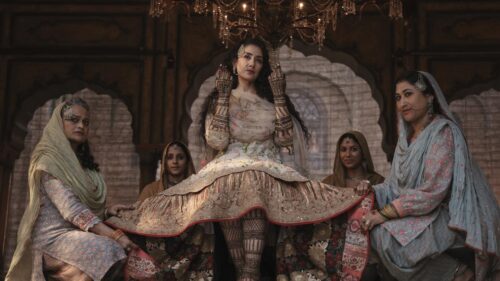
I can personally watch it over and over. There is love, history and great cinematography. Plus great ideas for outfits and opening my eyes to travel to Pakistan to witness this land first hand. If you have not watched it is a must binge-watch.
Stay updated on fashion, lifestyle and culture by following us on Instagram @stylecartel and TikTok @stylecartelmedia. Plus sign up for our newsletter to get the latest drops in your inbox.
