
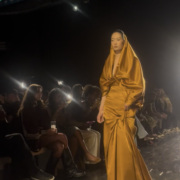


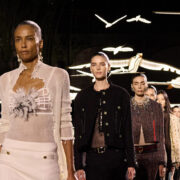


From smartphones to smart fabrics, technology is weaving itself into every part of our lives, including our closets. For years behind the seams, designers have been blending innovation and craftsmanship for decades. From Hussein Chalayan’s robotic dresses in the 90s to Iris van Herpen’s 3D-printed couture in our 21st century, tech has slowly stitched its way into fashion’s DNA.
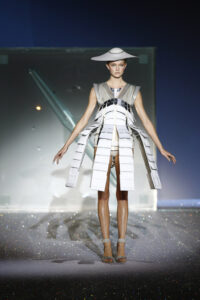
Now in 2025, fashion tech is no longer just an imagination, it has transcended into another growing field of inventing smart materials and even wearable computing. But as runway innovation continues to impress us, now in 2025, we still question whether it is ever possible to buy tech fashion at a commercial price.
HEATTECH: The First Commercially Buyable Fashion Tech
Look no further than the 2010s for an early example of fashion technology. The HEATTECH launched in 2003 by UNIQLO was a successful launch into a market during a time when wearable technology still sounded superficial, this line of thermally efficient undergarments invented an innovative stretch fabric that helps trap and circulate our natural body heat, offering lightweight warmth without the bulk of traditional layering.

UNIQLO’s goal was simple, the ability to create something functional, comfortable, affordable and an everyday essential instead of a luxury. HEATTECH quickly became a staple for winter wardrobes proving that innovation does not always need to be flashy and impactful.
While it may not qualify as “high-tech” by today’s standards, HEATTECH was the start of a greater revolution. It showed us that technology had the ability to seamlessly integrate into fashion, and even now, it remains a demandable item, proving that simple science can drive lasting innovation.
Fashion Tech Finally In Motion
Fashion is getting another software update and the future of fashion tech might just be wearable. The rapid advancement in both industries has started to push young designers towards experimenting further into the prospective unknown. The notable, Iris van Herpen, who pursued her brand in 2007 despite her engineering background has since earned herself a great reputation as a pioneer in the fusion of technology and couture.
Known for integrating 3D printing, kinetic elements inspired by architecture or biological occurrences her collections has redefined what futuristic fashion can be: sculptural, mechanical, and hauntingly beautiful. Her exhibition in Paris last year invited us to explore her universe from neuroscience, robotics to architecture, reminding us that true innovation often takes years to be fully understood or appreciated.
View this post on Instagram
View this post on Instagram
Equally boundary-pushing is ANREALAGE, a Japanese label by Kunihiko Morinaga. The brand has lit up a following for its use of LED lights on their garments for their recent Autumn Winter 2025/26 Paris Fashion Week show which was a visual overload, in the best way possible.
View this post on Instagram
Most recently, ANREALAGE made headlines again when Beyoncé wore one of their pieces on her current Cowboy Carter tour, reigniting the bright neon lights of ANREALAGE.
@stylecartelmedia Anrealage once again defies the boundaries of fashion with a collection that feels straight out of the future. 🌀 From innovative fabrics to transformative silhouettes, every piece was a masterpiece in motion! Which look took your breath away? #anrealage #pfw #parisfashionweek #explorepage #newcontent #newcontentcreator #fashion #newpost #explore #fashionblogger #fashiondesign #aw25 #fashionweek #anrealagefw25 #anrealageshow#CapCut ♬ som original – Natielyandrade
Another remarkable pioneer, Ying Gao, created garments that respond to voice and sound, eerie yet ethereal creations that literally come to life. Her work might bring some skepticism and confusion, but it challenges us to rethink interactivity in fashion and how impressive this was to achieve back in 2012.
The Accessibility Gap: Art vs. Utility
For all its beauty and brilliance, fashion tech still exists more on the runway as compared to commercial shelves.
Part of the problem lies in cost and the lack of necessity for it to become commercially viable. Creating garments that light up, react, or shift shape takes money, research, and time. Meanwhile, the economy somewhat forces consumers to prioritize minimalism, utility, and affordability, particularly in an era of inflation and climate consciousness. Fashion tech as we see on the runway can be perceived more of a luxury instead of an actual need.
View this post on Instagram
As a result, many impressive tech designs remain confined to museums, galleries, and luxury runways. HEATTECH, by contrast, remains one of the few commercialized tech pieces that addresses a practical need, at an accessible price point.
A New Form Of Escapism?
Now the big question comes as to, do we really need fashion tech to be commercial? Or cshould it only be reserved under the bright spotlights? Perhaps beyond function, fashion tech offers something just as valuable: Escapism.
Whether it’s VR/AR runways, interactive storytelling, or digital clothing that intersects between costume and code, tech grants us the opportunities to imagine new identities and explore new realities. During a tough, solemn and almost depressing style or color palette, some creative individuals may yearn for something innovative and futuristic.
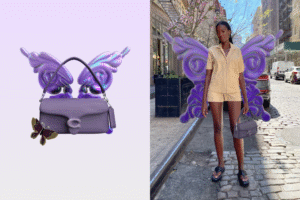
Such as how social media has transformed our everyday lives, fashion tech has the great potential to transform how we experience or perceive our clothing, not just how we wear it. But maybe for this transformation to truly happen, it needs to move beyond the avant-garde and into our everyday wardrobes.
Still, maybe confining fashion tech into something commercial would be a pity. Maybe fashion tech is really only meant to be a form of escapism, for now.
Looking Ahead: The Future in Our Industry
If something as simple and subtle as HEATTECH could be adopted on a global scale, then who knows the inventions of an AI wardrobe or emotionally responsive textiles can be buyable in the future?
As we welcome a generation raised on smart devices and heightened awareness, the possibilities are endless. But to fully realize them, we’ll need both the visionary, the practical, and perhaps a little more willingness to embrace the unfamiliar.
What do you think?
The contemplation between being either creative or commercial in fashion is always up for the debate. Do you think fashion tech will ever go mainstream? Should designers focus on everyday tech or keep it fantastical and avant-garde for pure means of entertainment? What are your thoughts on fashion tech?
Let us know in the comments!
And for more on where tech meets style, follow Style Cartel on Instagram or on our TikTok!